Agriculture
Soya Powder Supply, Sourcing and Bulk Procurement
How buyers can define the exact soybean-derived powder or meal they need before asking suppliers to quote.
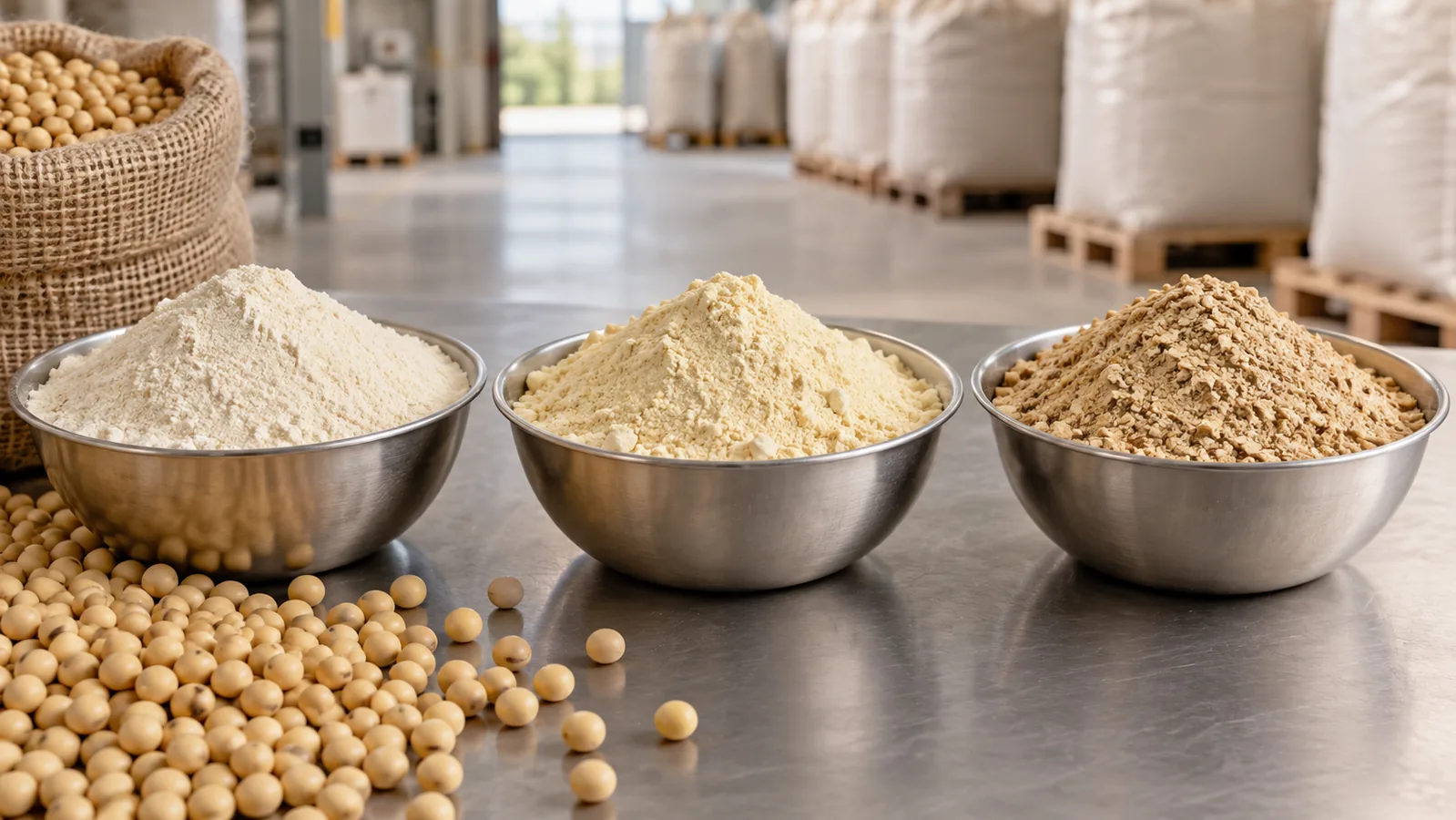
Table of Contents
“Soya powder” is a broad market phrase, not one universal commodity specification. Depending on the buyer and application, it may mean full-fat soy flour, defatted soy flour, a beverage powder, finely ground soybean meal or another processed soy ingredient; those products differ in composition, processing, food or feed status and price.
A bulk buyer should therefore define the intended use first and name the exact soybean product before requesting a quote. If the term remains ambiguous, a supplier cannot reliably select the correct grade or documents.
What Is Soya Powder?
Soya powder generally describes a dry, ground or spray-dried soybean-derived product. It does not, by itself, tell a supplier whether the buyer needs a food ingredient, feed ingredient, full-fat material, defatted flour, beverage base or a particular heat treatment.
FAO technical guidance describes full-fat soy flour as a modern industrial form of “soybean powder,” produced from dehulled whole beans, while soybean oil processing produces a separate meal fraction that may also be finely ground. Commercial usage can be wider than these technical definitions, so the specification must control.
Different Types of Soybean Powder Products
The right product depends on whether the buyer needs the whole-bean composition, an oil-reduced flour, an oil-extraction co-product or a formulated powder.
| Product term | General description | Typical buying question |
|---|---|---|
| Full-fat soy flour or powder | Finely ground, properly processed whole soybeans with much of the natural oil retained | What heat treatment, particle size and food/feed grade are required? |
| Defatted soy flour | Fine flour made from dehulled soy material after most oil has been removed | What protein functionality, residual fat and microbiological limits apply? |
| Soybean meal | Ground solid residue or flakes from soybean oil production, traded mainly for feed | Is the application feed, and what nutrient and processing specification applies? |
| Soy beverage powder | A formulated or processed powder intended to prepare a beverage | What ingredients, solubility, fortification, allergen and food-safety requirements apply? |
| Specialty soy ingredient | Products such as concentrates, isolates or application-specific functional ingredients | Which named ingredient and functional performance does the formulation require? |
These categories are not interchangeable. A request for “soya powder” should be rewritten using the closest technical product name and a complete specification.
Soya Powder vs Soybean Meal
Soybean meal is produced from the solid fraction remaining after soybean oil extraction and is used predominantly as an animal-feed ingredient. “Soya powder” may refer to meal in informal trade, but it can also mean food-grade soy flour or another product.
Feed buyers should normally request soybean meal and state the extraction process, nutrient specification and physical form. Food buyers should not accept feed meal merely because it is finely ground; food-grade source materials, hygienic controls, processing, testing and regulatory compliance must be confirmed separately.
Soya Powder vs Soy Flour
Soy flour is a more specific term for finely ground soybean material produced to a defined process and particle size. It may be full-fat or defatted, and different heat treatments create different functional characteristics.
USDA commodity requirements, for example, describe full-fat soy flour as a screened, finely ground product from cleaned and processed soybeans and defatted toasted soy flour as a screened, finely ground product that has also been defatted and toasted. Those are examples of defined products, not specifications that automatically apply to every market offer.
Food-Grade and Feed Applications
Food and feed uses require different product definitions and control systems. A food manufacturer may evaluate flavour, colour, particle size, dispersibility, protein functionality, microbiological criteria, allergen controls and compatibility with bakery, beverage or formulated-food processes.
A feed manufacturer may instead evaluate soybean meal or processed full-fat soy using nutrient analysis, heat-treatment indicators, residual oil, fibre, moisture, anti-nutritional-factor controls and feed-safety criteria. In both cases, a qualified technical professional should approve the ingredient for the formulation.
Who Buys Soya Powder in Bulk?
Potential buyers include food and beverage manufacturers, bakeries, ingredient blenders, institutional food suppliers, animal-feed producers, premix companies, wholesalers, importers and distributors. Their requirements differ enough that the end-use sector should appear in the first sentence of the RFQ.
A distributor serving multiple industries may need separate stock-keeping units and specifications rather than one generic powder. Traceability and clear labels help prevent food, feed and specialty products from being confused in storage or resale.
Specifications Buyers Need to Confirm
The specification should identify the product, process, analytical limits and functional requirements. Useful fields include:
- Exact name: full-fat soy flour, defatted soy flour, soybean meal, beverage powder or another defined ingredient
- Food-grade or feed-grade status and intended application
- Raw-material and processing description, including dehulling, extraction and heat treatment where relevant
- Protein, fat, moisture, fibre and ash requirements on a clearly stated basis
- Particle-size distribution, colour, odour, flavour, flowability or dispersibility where needed
- Heat-treatment or functionality tests appropriate to the product
- Microbiological, allergen, mycotoxin, residue and contaminant criteria
- Genetically modified organism or identity-preservation declarations if contractually required
- Sampling, test methods, certificate format and lot traceability
Numerical limits should come from the buyer's formulation, applicable standard and supplier data. This article does not turn published typical ranges into guaranteed Duara Group specifications.
Packaging and Bulk Supply
Dry soybean ingredients may be supplied in sealed bags, lined bags, bulk bags or other systems compatible with the product and route. Food powders may require tighter hygiene, moisture and allergen controls than commodity feed meal. Actual packaging and unit sizes depend on the approved supplier.
State bag material, liner, net weight, label language, allergen statement, lot coding, pallet and stretch-wrap needs, maximum stack height and container-preparation requirements. Fine powders may also need dust-control planning at the receiving site.
Sourcing Soybean Products
Begin by translating the finished-product need into a named ingredient. Samples, specification sheets and certificates of analysis can then be compared on the same basis. For functional food ingredients, a production trial may be more informative than composition alone.
Duara Group reviews agricultural-commodity and food-ingredient sourcing requests for African and international buyers subject to product definition, supplier confirmation and route feasibility. Explore food-ingredient sourcing, the animal-feed raw-material sourcing hub, the soybean oil product page, and the related guide to bulk soybean oil procurement.
International Procurement
Cross-border supply requires the product's regulatory status to be clear. Import rules can differ for food ingredients, feed materials, formulated beverage powders and specialty proteins. The buyer should verify classification, permits, allergen labelling, food or feed registration, sanitary controls and any biotechnology-related declarations required at destination.
The contract should name the Incoterm and place, delivery window, packaging basis, shelf-life requirement at arrival, inspection point and document responsibilities. Dry powders and meals also need moisture protection, clean containers and suitable storage throughout transit.
What to Include in Your RFQ
Use this checklist to replace an ambiguous “soya powder” inquiry with a procurement-ready request:
- Exact product name or a detailed description if the name is uncertain
- Food, feed or other intended application
- Required processing method, grade and technical specification
- Functional needs such as particle size, solubility, flavour or heat treatment
- Quantity, trial volume and recurring delivery schedule
- Packaging, labels, allergen statements and palletisation
- Destination country, port and final location
- Requested Incoterm and named place
- Required certificates, declarations, analysis and inspection
- Currency and payment requirements for commercial discussion
If you are unsure which technical name fits, use the Duara Group product request form and describe the finished use, desired composition and process. The sourcing team can then determine what clarification is needed before approaching suppliers.
Pricing Factors
Prices vary by the exact soybean product, oil and protein profile, degree of processing, functional performance, food or feed controls, certification requirements, quantity, packaging, origin, freight, currency and delivery term.
Soy flour, soybean meal and specialty protein ingredients should not be compared on price per tonne as if they were equivalent. Compare offers only after confirming product identity, analytical basis, usable functionality, pack size and landed-cost assumptions.
Frequently Asked Questions
What is soya powder?
It is a broad name for a dry soybean-derived product. It may mean soy flour, a full-fat powder, finely ground soybean meal, beverage powder or another ingredient, so the intended use and specification must be stated.
Is soya powder the same as soybean meal?
Not always. Soybean meal is the solid oil-extraction co-product used mainly in feed. Some sellers may call a finely ground meal “powder,” but food-grade soy powders can be entirely different products.
Is soy flour the same as soybean powder?
Soy flour can be one type of soybean powder, but “soybean powder” is less precise. Specify whether the flour is full-fat or defatted and state its processing, particle-size and application requirements.
Is soya powder used for food or animal feed?
Products sold under that broad name may be intended for either. Food-grade and feed-grade materials require different specifications and controls, so the buyer must identify the application.
Where can I buy soya powder in bulk?
Approach an ingredient manufacturer, authorized distributor or sourcing company with the exact product definition, quantity and destination. Duara Group can review a sourcing request once the intended product and specification are clear.
How is bulk soya powder supplied?
It may move in sealed bags, lined bags, bulk bags or another approved dry-ingredient format. Packaging availability depends on the product, supplier, hygiene requirements, route and receiving equipment.
Sources and Further Reading
- FAO: Technology of production of edible flours and protein products from soybeans
- USDA Agricultural Marketing Service: Soybean meal terminology
- USDA Agricultural Marketing Service: Defined soy flour processing examples
- Duara Group: Soya meal and soya powder sourcing
- Duara Group: Animal-feed raw-material sourcing hub
- Duara Group: Food ingredients sourcing
Source with Duara Group
Need to source a soybean-derived powder or meal? Send Duara Group the exact product type, application, specification, quantity, packaging, destination and delivery terms for review.
Follow Duara Group insights on Google
Related articles
Agriculture
Canola Meal Supply, Sourcing and Bulk Procurement
How animal-feed buyers can define, evaluate and source canola meal without relying on an ambiguous product name or assumed nutrient values.
Agriculture
Rice Polish: Uses, Quality and Bulk Supply for Animal Feed
A practical buyer's guide to rice polish, from milling and feed use to quality, storage, packaging and commercial sourcing.
Agriculture
Sunflower Seeds: Types, Uses and Commercial Supply
Oilseed sunflower and confectionery sunflower serve different markets. This guide explains how commercial buyers specify the right seed for processing or food use.