Duara Dev
Driving digital transformation and building scalable technology infrastructure for the modern African enterprise. We specialize in robust, innovative solutions across the tech spectrum.
Core Focus Areas
Comprehensive technological capabilities driving growth.
Software Development
Custom enterprise software solutions tailored to complex business requirements. We build scalable, secure, and maintainable systems.
Artificial Intelligence
Integrating predictive analytics, machine learning, and automation into core business processes.
Cloud Infrastructure
Robust, secure cloud deployment and management services ensuring high availability.
Web Development
Modern, responsive web applications prioritizing user experience and performance.
Mobile Apps
Native and cross-platform mobile solutions connecting businesses directly to their consumers.
Subdivisions
Specialized entities operating under the Duara Dev umbrella.
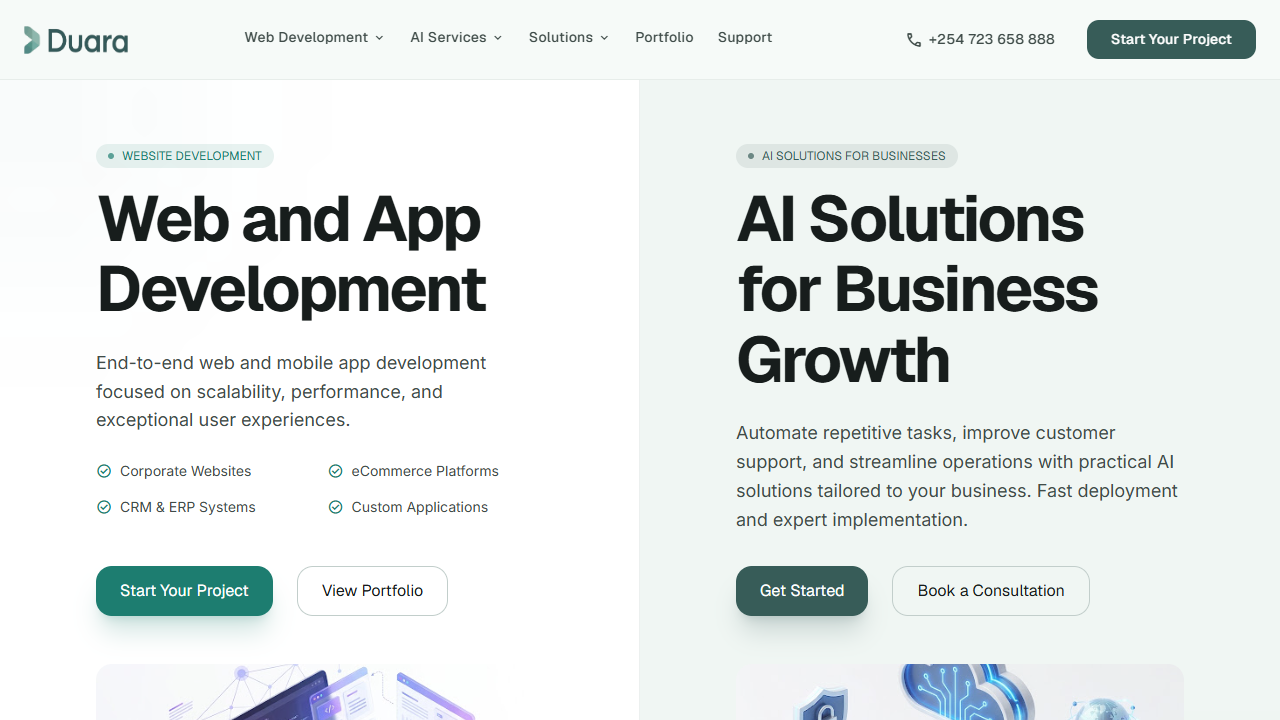
Duara Dev
Custom software development, web applications, and comprehensive digital solutions for modern businesses.
Learn More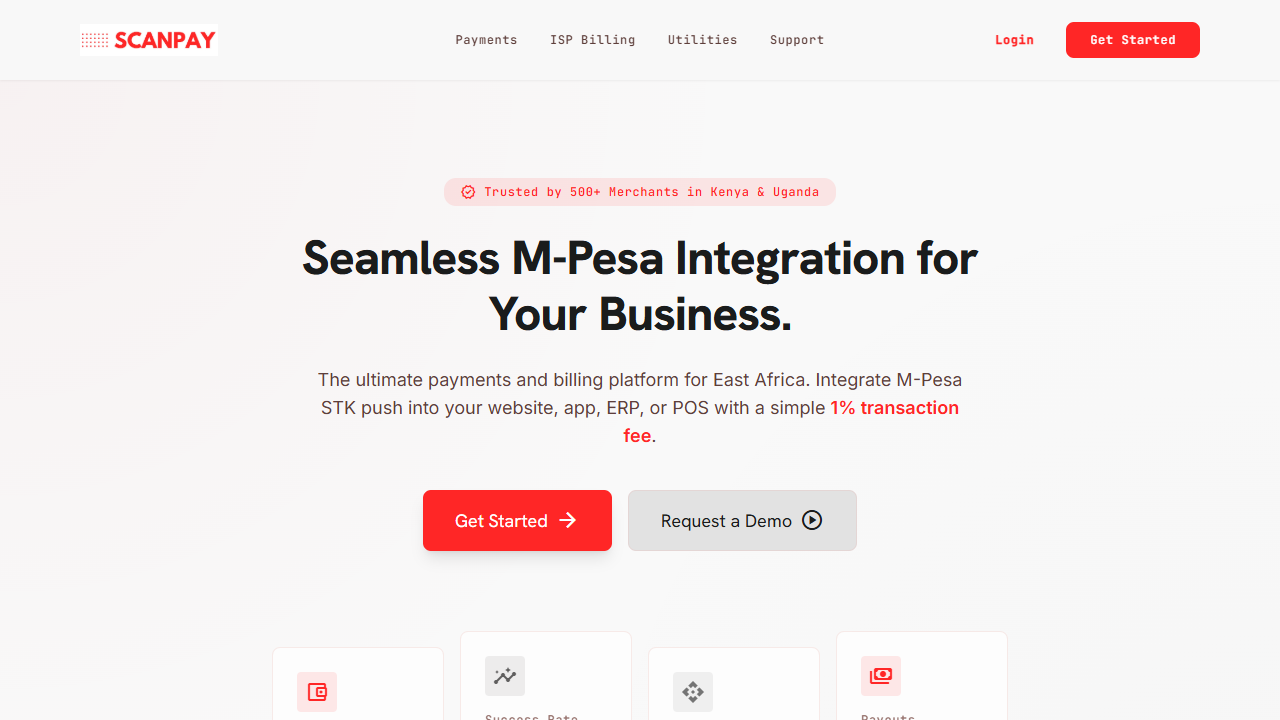
ScanPay
Secure, seamless digital payment gateways facilitating commerce and financial inclusion across the continent.
Learn MoreWhat Duara Dev builds
Duara Dev is the software-development arm of Duara Technology. It plans, builds, integrates and supports customer-facing and internal systems alongside the hardware, cloud, security and infrastructure supplied by the technology division.
Websites and web platforms
Corporate websites, product catalogues, e-commerce, portals and enquiry or booking flows planned around content ownership, search visibility, performance and the business process behind each form.
Website and e-commerce platformsMobile and web applications
Customer-facing and internal applications for accounts, field work, approvals, data capture, operations and reporting. The delivery scope is defined from users, devices, connectivity and the systems the application must work with.
Discuss an applicationERP, CRM, POS and business systems
Implementation and custom-development work around finance, procurement, inventory, sales, customer service and point-of-sale workflows, including roles, reports and migration from existing records.
Explore ERP planningAI implementation and automation
Applied AI and workflow automation for defined business tasks, with representative data, evaluation, human review and operating controls included in the scope rather than added after a prototype.
AI platforms and servicesSystems integration
APIs and integrations that connect websites, applications, ERP, CRM, POS, databases, identity, devices and third-party services. Existing interface documentation and test environments are reviewed during discovery.
Developer and DevOps platformsPayments and fintech integration
Payment acceptance, callbacks, reconciliation and reporting integrated into merchant or platform workflows. ScanPay is the group's payment service; other payment interfaces are scoped against the required markets and systems.
Payment servicesData migration and reporting
Assessment, cleaning, mapping and controlled movement of business data into a new system, with reconciliation and rollback criteria. Reporting is designed around the decisions users need to make.
Database platformsMaintenance and support
Post-launch monitoring, defect correction, security and dependency updates, backups, change requests and user support agreed as an operating service with clear ownership.
Discuss ongoing supportHow a software project moves from idea to operation
The stages are adapted to the project, but each decision is made before the next one depends on it.
- Step 1
Discovery
Clarify the business outcome, users, current process, systems, constraints and decisions that still need evidence.
- Step 2
Design
Translate the approved scope into journeys, data, interfaces and acceptance criteria before committing to a full build.
- Step 3
Development
Build in reviewable increments, keeping source, environments, configuration and integrations controlled.
- Step 4
Testing
Check functional paths, permissions, integrations, devices, performance and failure cases with representative data.
- Step 5
Deployment
Prepare environments and data, agree cutover and rollback, release the system and verify production behavior.
- Step 6
Handover
Provide agreed documentation, administrator access, training and ownership of services, credentials and support routes.
- Step 7
Maintenance
Monitor, update and improve the live system under the maintenance and support scope agreed for the project.
Prepare a project brief
For a useful project quotation, explain the problem to solve, the people who use the system, the current workflow, required website, web, mobile or business-system features, existing software and data, integrations, payment needs, security or compliance constraints, deployment environment and the outcome used to accept the work.
Request a project quotationFrequently asked questions
What does Duara Dev do?
Duara Dev builds websites, web platforms, and mobile and web applications, and handles payments integration and systems integration work. It is the software arm of Duara Technology, which supplies the hardware, networking and infrastructure.
Can Duara Dev work on an existing system?
Yes. Taking over, extending or integrating an existing codebase or platform is common work. What is involved depends on the state of the system, which is assessed before anything is quoted.
Do you build the hardware side as well?
Through Duara Technology, yes - servers, networking, endpoints and infrastructure are supplied and deployed by the same group, which is often the difference between a system that launches and one that waits on procurement.
How do I start a project?
Send an outline of the business problem, users, current process, required features, existing systems, data and integrations. Discovery confirms the scope and unresolved decisions before a commercial proposal is prepared.