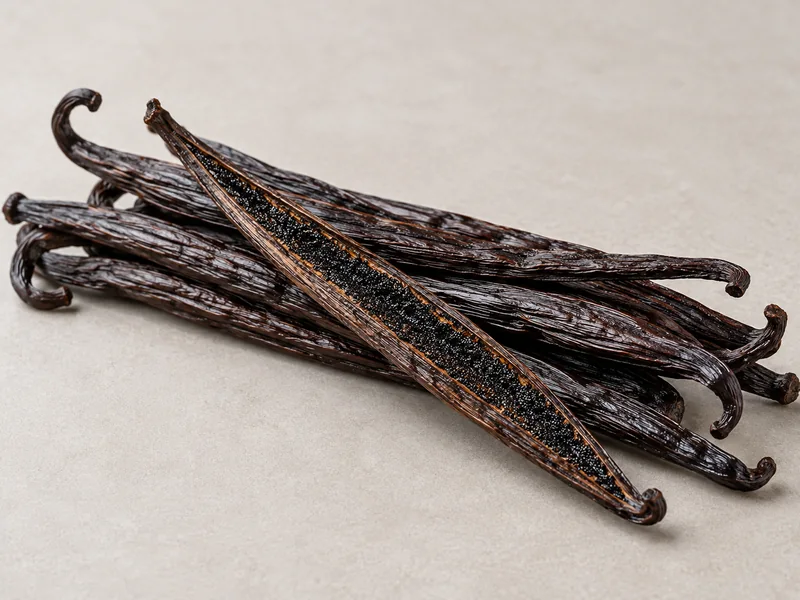
Vanilla beans and processing requirements by species, curing, condition, moisture basis and intended application.
Vanilla is an aromatic crop traded as cured beans and as separately specified processed ingredients. Species, growing origin, curing and bean condition can all matter to a buyer, but an origin name or a grade letter is not a complete quality specification. Whole beans intended for visual presentation differ from beans or cuts intended for extraction. Duara Group reviews the requested identity, physical form, quality, packing and destination. Crop-production records identify documented vanilla output; they do not establish cured export-grade volumes, local extraction capacity or a confirmed Duara source.
Bulk supply available upon request. Source and supply available upon request.
Pricing Calculator / Build an RFQ
Loading commodity requirements…
Indicative Estimate
Indicative estimate only. Prices are subject to change based on current market conditions, product grade and specifications, crop season, availability, freight, taxes, duties, destination, regulations and final supplier confirmation. This is not a binding quotation.
Prepared in your browser. Your request is shared when you send it in WhatsApp.
Vanilla buying guide
Species, origin and the product actually ordered
Specify the vanilla species or accepted commercial identity and any required origin evidence. An origin name should be supported by traceability rather than inferred from a style description. Green harvested pods, cured beans, bean cuts, powder, extract and paste are different products. A crop statistic should not be converted into cured-bean or extract supply without evidence. Synthetic vanillin or a vanilla-flavoured preparation is not equivalent to whole vanilla beans; ingredient identity and labelling need to match the actual purchase and intended market.
Curing and bean-condition assessment
For cured beans, request the proposed curing and conditioning description, physical presentation and lot traceability. Assess aroma, flexibility, moisture condition, splits, surface condition and other defects using an agreed sample and acceptance method. Bean length and visual uniformity may matter for retail or food-service presentation, while an extraction buyer may prioritise other criteria. A visually glossy bean or a general gourmet description does not prove authenticity, analytical composition or suitability for every manufacturing process. Agree which physical and analytical checks support the actual application.
Grade letters are not universal specifications
Trade descriptions such as Grade A and Grade B can be used differently by suppliers and markets. Replace assumptions with an agreed definition of form, size, condition, moisture basis and permitted defects. Where vanillin content or another analytical measure is important, define the method, reporting basis and acceptance criteria with the buyer's technical team. Do not compare test percentages without knowing their basis. A reference standard or origin reputation is not a confirmed Duara lot specification, and no particular analytical result is promised on this page.
Whole beans, powder, extracts and recipe use
Whole beans may be selected for visible seeds, pod presentation and kitchen preparation. Ground material requires identity, ingredient and particle-size checks, including whether it contains only the declared bean material. Extracts and pastes need separate specifications for ingredients, concentration or strength basis, carriers, sweeteners where present and applicable labelling. A bean-growing country does not automatically manufacture those products. Manufacturers should test a representative sample in their own process and define how any proposed change in species, form or formulation will be approved.
Protective packing and storage evidence
Agree the pack format, net contents, seal integrity, lot coding and protection against moisture loss, moisture pickup, contamination and odour transfer. Follow the actual product's storage instructions and shelf-life evidence rather than prescribing a universal temperature or guaranteed duration for every form. Review transport and receiving conditions with the proposed packer, including how pack damage or suspect surface growth will be handled. A tightly sealed pack alone is not proof of appropriate moisture condition or microbiological quality; those need a product-specific acceptance basis.
Preparing a vanilla procurement brief
Send species, declared origin requirements, cured or processed form, whole-bean or cut presentation, quality and analytical criteria, intended use, quantity, pack and destination. Include authenticity checks, traceability, sample approval and any customer documents. If a particular certification is requested, verify it for the actual operator and product scope. Duara reviews the proposed source and workable route separately. The production directory provides crop context with source dates and limits, not available export-grade stock, a confirmed partnership or a guarantee of supply from every producing country.
Documented Production by Country
The records below describe raw vanilla crop production as defined by faostat; not inferred cured export-grade or extract output. Quantities are national production statistics for the stated year, not available export quantities or Duara supply capacity. Estimates are labelled; uncorroborated imputed observations are retained internally rather than published as verified production.
These are dated production or manufacturing records, not a list of Duara suppliers or confirmed delivery destinations. The directory covers the evidence verified so far; it does not claim an exhaustive list of all producing countries.
Grade, origin, packaging and order quantity are agreed per consignment. We do not publish stock or origin claims.
Typically supplied asCured whole beans, Cured cuts or splits, Ground vanilla by specification, Extract or paste requirements assessed separately
Grades and varietiesConfirmed on inquiry
PackagingConfirmed on inquiry
Minimum order quantityConfirmed on inquiry
Country of originConfirmed on inquiry
Certification and documentationConfirmed on inquiry
Confirm when you enquire
Tell us the following and we will come back with availability, packaging and a quotation.
radio_button_uncheckedSpecies and declared origin
radio_button_uncheckedCured form and processing history
radio_button_uncheckedBean length or cut presentation
radio_button_uncheckedCondition and moisture basis
radio_button_uncheckedAroma or analytical requirements
radio_button_uncheckedIngredient and authenticity declaration
radio_button_uncheckedProtective pack and lot coding
radio_button_uncheckedApplication, quantity and destination
Applications
checkBakery and confectionery
checkDairy and dessert manufacture
checkFood-service kitchens
checkFlavour and extraction processors
Frequently asked questions
Are Grade A and Grade B universal vanilla standards?
No. Ask what the seller means and agree measurable requirements for form, condition, size, moisture basis and defects.
Do crop-production tonnes equal cured export-grade beans?
Not automatically. Read the statistical commodity definition and do not infer curing, export grade, processing yield or available stock.
Is vanilla flavouring necessarily vanilla beans or pure extract?
No. Obtain the complete ingredient and product identity declaration. Synthetic vanillin and formulated flavourings are different purchase requirements.
What should an extract buyer specify?
The intended application, ingredient and concentration basis, carriers, label requirements, analytical criteria, packing and traceability, supported by the actual processor's specification.