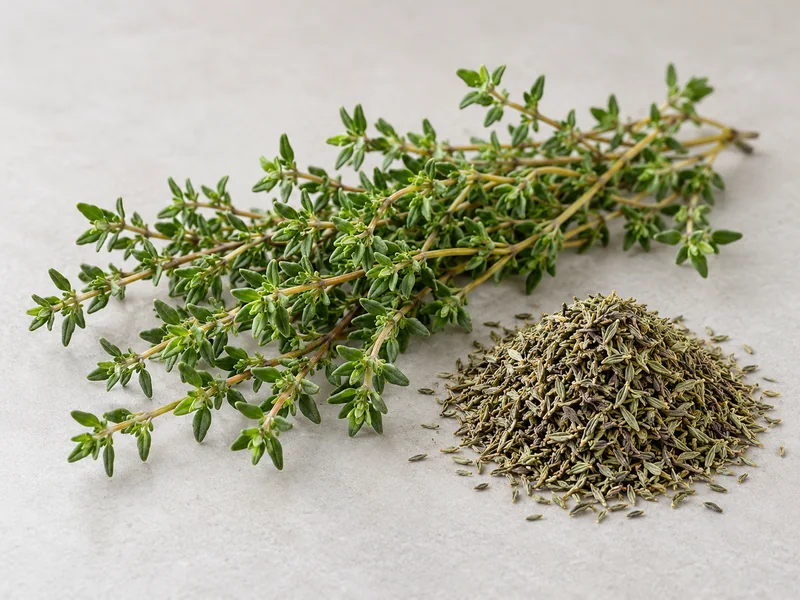
Fresh and dried thyme by culinary identity, leaf-to-stem presentation, cut size, aroma and packing.
Thyme is traded as fresh sprigs and as dried leaves or cut material for culinary use. Its small leaves and branching stems make presentation and leaf-to-stem content particularly important when comparing offers. Common culinary thyme and a named lemon-scented or other specialty type should not be substituted without agreement. Duara Group reviews the required identity, form, quality and packing for food-service, retail or manufacturing buyers. A country's documented herb cultivation does not establish a specific cultivar, processing operation or available Duara consignment.
Bulk supply available upon request. Source and supply available upon request.
Pricing Calculator / Build an RFQ
Loading commodity requirements…
Indicative Estimate
Indicative estimate only. Prices are subject to change based on current market conditions, product grade and specifications, crop season, availability, freight, taxes, duties, destination, regulations and final supplier confirmation. This is not a binding quotation.
Prepared in your browser. Your request is shared when you send it in WhatsApp.
Thyme buying guide
Define the culinary type and ordered form
Identify the culinary species or accepted type and any named flavour profile that matters to the recipe. A lemon-thyme requirement should not be fulfilled with an unspecified thyme blend merely because the common name overlaps. Fresh sprigs, dried whole leaves and ground material need separate specifications. Ask the proposed supplier to describe what is actually being offered and how identity is maintained through processing. Essential oil and extracts are separate ingredient inquiries and are not implied by a record of thyme cultivation.
Leaf-to-stem balance and preparation yield
Fresh sprigs can be suitable where a kitchen strips or removes stems during preparation, while dried leaf buyers may need a tightly defined stem tolerance. Set the presentation and acceptance basis before comparing a price by weight. Check the distribution of whole leaves, broken leaf and woody material in a representative sample. A nominal cut description alone does not show usable yield in the buyer's application. If stem content or fine material affects the finished product, agree a sampling method and tolerance rather than relying only on visual inspection.
Aroma, cleanliness and processing requirements
Assess aroma and colour against the intended culinary application and an agreed reference, recognising that drying, cutting and storage affect the delivered product. Define foreign-matter and physical-defect acceptance criteria. A food manufacturer should state any moisture, microbiological, residue or other analytical requirements and how they will be verified for the lot. A treatment or certification claim must be documented for the actual product and operator. These requirements are procurement decisions, not claims that all thyme offered through Duara carries a particular analysis or certificate.
Packing for kitchen, retail and industrial use
Fresh bunches, retail punnets and bulk kitchen packs differ in net content, stem arrangement and handling. Agree the presentation that fits the buyer's receiving and preparation process. Dried thyme may require lined bulk packs or smaller sealed units, with protection against moisture and contamination. Confirm bag or liner specification, outer-pack strength, lot coding, label language and pallet limits. Ground material may need additional controls against leakage or dust contamination. The quote should identify packaging and net contents clearly enough to compare like-for-like offers.
Handling and shelf-life evidence
Obtain storage and transport instructions for the actual fresh or dried form. Fresh thyme should be assessed against the planned route, pack and receiving condition, rather than a generic maximum transit time. Dried material requires protection from moisture, strong odours and damage to the pack seal. Ask for the date-code system and shelf-life basis, and define the condition required at receipt. A country-production record does not establish when a particular lot was harvested, dried or packed, so those dates and traceability details need separate confirmation.
Information that makes a thyme inquiry actionable
Provide the culinary type, fresh or dried form, leaf-to-stem requirements, cut or particle size, intended use, quality criteria, quantity, pack and destination. Include sample approval, testing and customer-document requirements. Identify any substitutions that would need written approval, especially changes in type or physical form. Duara then assesses the proposed supply and route against the brief. Growing-country evidence is background on production; it is not proof of confirmed Duara stock, processing capability, certification or delivery eligibility from each listed origin.
Documented Production by Country
These are documented examples of thyme cultivation or processing. Named operators are evidence of activity, not Duara partners. Undated statements are labelled as such; no national quantities, certifications or availability are inferred. Global country coverage remains partial.
These are dated production or manufacturing records, not a list of Duara suppliers or confirmed delivery destinations. The directory covers the evidence verified so far; it does not claim an exhaustive list of all producing countries.
Thyme in Ethiopia
Green Mark names thyme among herbs grown on its Ethiopian farms. This is direct cultivation evidence; no national quantity or processed-ingredient output is inferred.
Grade, origin, packaging and order quantity are agreed per consignment. We do not publish stock or origin claims.
Typically supplied asFresh thyme sprigs, Dried whole leaves, Dried cut thyme, Ground thyme by specification
Grades and varietiesConfirmed on inquiry
PackagingConfirmed on inquiry
Minimum order quantityConfirmed on inquiry
Country of originConfirmed on inquiry
Certification and documentationConfirmed on inquiry
Confirm when you enquire
Tell us the following and we will come back with availability, packaging and a quotation.
radio_button_uncheckedCulinary species or named type
radio_button_uncheckedFresh or dried status
radio_button_uncheckedLeaf and stem content
radio_button_uncheckedCut or particle-size basis
radio_button_uncheckedAroma and colour
radio_button_uncheckedCleanliness and testing
radio_button_uncheckedInner and outer pack
radio_button_uncheckedDestination and volume
Applications
checkFood-service kitchens
checkRetail herb packs
checkSeasoning blends
checkSauce and prepared-food manufacture
Frequently asked questions
Is lemon thyme the same purchase as common thyme?
Not automatically. Specify the culinary type and aroma profile needed for the recipe and approve any substitution.
Why does leaf-to-stem content matter?
It changes preparation needs, appearance and usable yield. Fresh sprigs and stripped dried leaves should be compared on their actual presentation.
Can a cut-size label establish purity?
No. Cut size describes physical form; identity, stem content, foreign matter and any analytical requirements need separate acceptance criteria.
What supports a shelf-life claim?
The proposed product's processing, pack, storage instructions, date coding and supporting evidence, assessed against the actual route and receiving condition.