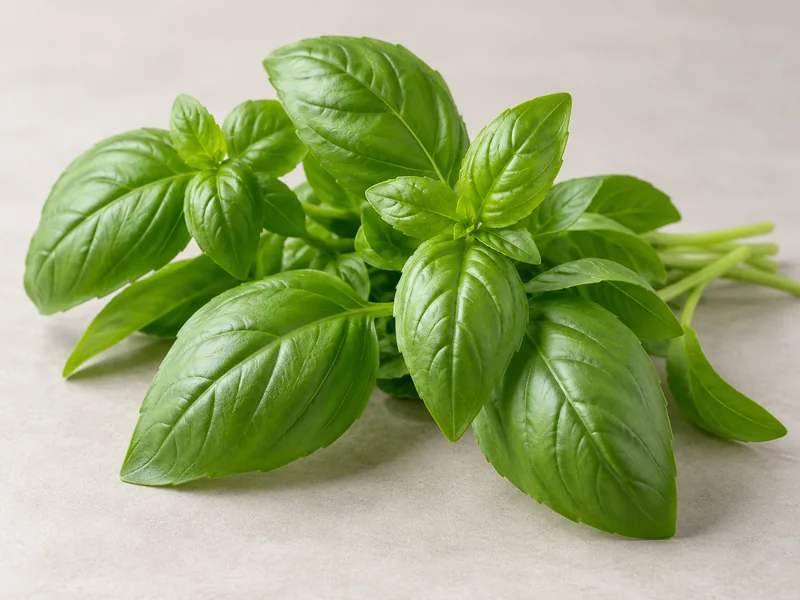
Basil for fresh herb programmes and food manufacture, with type, leaf presentation and handling specified.
Basil procurement includes fresh culinary leaves and sprigs as well as dried material for seasoning. Sweet basil, Thai basil and other named culinary types have distinct flavour and presentation requirements and should be identified in the inquiry. Fresh basil is also particularly sensitive to inappropriate chilling, so a standard mixed-herb cold-chain assumption is unsuitable without review. Duara Group assesses the proposed type, form, quality, packing and route against the buyer's intended use. Production-country evidence does not establish that every type or processed form is available from those origins.
Bulk supply available upon request. Source and supply available upon request.
Pricing Calculator / Build an RFQ
Loading commodity requirements…
Indicative Estimate
Indicative estimate only. Prices are subject to change based on current market conditions, product grade and specifications, crop season, availability, freight, taxes, duties, destination, regulations and final supplier confirmation. This is not a binding quotation.
Prepared in your browser. Your request is shared when you send it in WhatsApp.
Basil buying guide
Culinary type comes before a price comparison
State the named basil type and intended application. A sweet-basil requirement for a particular sauce should not be treated as equivalent to any herb sold under the basil name. Fresh leaves, sprigs and dried leaf also differ in recipe performance and purchasing basis. A processor should identify whether the material will be chopped, blended or otherwise manufactured, while a retailer should define the desired pack presentation. Confirm identity and any permitted substitutions through the specification and sample-approval process rather than by colour alone.
Fresh-leaf quality and preparation
Review leaf colour, turgidity, bruising, blackening, physical damage and the condition of the stems. Define the acceptable leaf and stem presentation for the intended use. A visually attractive sprig can still produce a different usable yield from a leaf-only pack, so agree the net content and preparation basis. If washed or otherwise prepared leaves are proposed, clarify the process and relevant food-safety documentation. This page does not imply ready-to-eat status, a particular washing treatment or a universally applicable shelf life.
Dried basil and ingredient specifications
Dried whole leaf, cut material and powder need definitions for particle size, stem content, colour, aroma and cleanliness. A manufacturer should assess a representative sample in its own recipe and identify any moisture, microbiological, residue or other testing requirements. Agree whether processing or decontamination treatments are acceptable and obtain the declaration for the actual lot. Fresh-crop output cannot be used as evidence of dried-basil processing capacity. Likewise, essential oil, extracts and prepared pesto are distinct products requiring separate ingredient and manufacturing specifications.
A basil-specific transport plan
Fresh basil is chilling-sensitive, making the proposed temperature and handling regime an important part of procurement. Confirm a product-specific plan with the packer instead of assuming that the coldest available vegetable load is appropriate. Review the route, transfer points, condensation risk, ventilation and receiving storage together. Agree the required arrival condition and how damage will be assessed. Avoid promising a standard number of days of usable life: cultivar, harvest condition, preparation, pack and handling history all need to be considered for the proposed lot.
Packs and commercial applications
Retail packs should define net content, leaf or sprig arrangement, labelling and pack protection. A kitchen or sauce processor may prefer bulk presentation, but it still needs a clear stem allowance and handling specification. Dried basil needs protection from moisture, odour contamination and pack damage, with suitable inner and outer packaging. Confirm lot coding and pallet limits for either form. A pack designed for display should not automatically be assumed suitable for the same transport and unloading process as an industrial ingredient pack.
Preparing a basil supply brief
Send the culinary type, fresh or dried status, leaf and stem requirements, intended application, quality criteria, packing, quantity and destination. Include receiving facilities, proposed schedule, sample approval and analytical or customer-document requirements. Ask for the offered product's handling and shelf-life evidence. Duara assesses an actual source and workable route against the brief; the country directory is cultivation context and not a catalogue of approved suppliers. Any certification or prepared-food claim must be verified separately for the operator, product and relevant scope.
Documented Production by Country
These are documented examples of basil cultivation or processing. Named operators are evidence of activity, not Duara partners. Undated statements are labelled as such; no national quantities, certifications or availability are inferred. Global country coverage remains partial.
These are dated production or manufacturing records, not a list of Duara suppliers or confirmed delivery destinations. The directory covers the evidence verified so far; it does not claim an exhaustive list of all producing countries.
Basil in Ethiopia
Green Mark names basil among herbs grown on its Ethiopian farms. This is direct cultivation evidence; no national quantity or processed-ingredient output is inferred.
Aromatic Fresh describes basil as its principal crop at Kitengela. The statement supports cultivation, without identifying every culinary type or processing form.