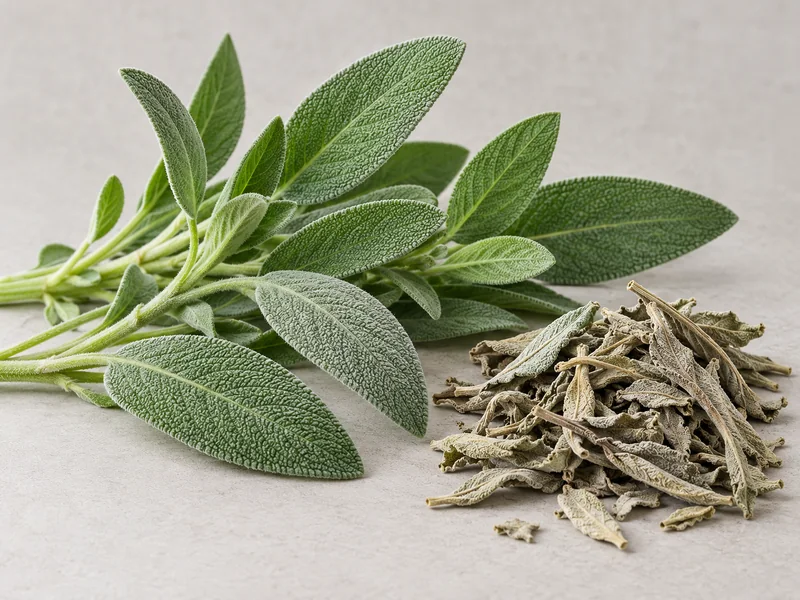
Culinary sage by botanical identity, fresh or dried form, leaf condition, aroma and buyer specification.
Culinary sage is traded as fresh leaves or sprigs and as dried whole, cut or ground leaf for food preparation. The familiar grey-green leaf appearance is useful for presentation but is not a substitute for botanical identity. This page concerns culinary sage, not an automatic offer of white sage, ornamental species, medicinal preparations or essential oil. Duara Group reviews the form, quality, packing and intended application requested by the buyer. The country directory records documented cultivation rather than confirmed Duara supplier relationships or a guarantee of every sage derivative.
Bulk supply available upon request. Source and supply available upon request.
Pricing Calculator / Build an RFQ
Loading commodity requirements…
Indicative Estimate
Indicative estimate only. Prices are subject to change based on current market conditions, product grade and specifications, crop season, availability, freight, taxes, duties, destination, regulations and final supplier confirmation. This is not a binding quotation.
Prepared in your browser. Your request is shared when you send it in WhatsApp.
Sage buying guide
Specify culinary identity without relying on the common name
Identify the culinary sage required, including botanical identity where needed, and state whether substitutions are permitted. White sage, ornamental plants and other products carrying a sage common name should not be treated as equivalent ingredients. Fresh leaves, whole dried leaves and powder are separate quotation forms. Extracts and essential oils need their own product and processing specifications. A cultivation record establishes only the documented crop activity; it cannot confirm the identity or suitability of an offered processed ingredient without traceability and supplier evidence.
Fresh leaf presentation and physical quality
Fresh sage buyers should agree leaf size or presentation where commercially relevant, stem allowance and acceptance criteria for bruising, discolouration, wilt and physical damage. Assess the actual pack rather than a stylised reference image. A leaf-only order and a sprig order can create different preparation work and usable yield for a kitchen. State whether the herb will be used for garnish, cooking or further processing, and clarify any washing or preparation status. None of those uses establishes ready-to-eat status or a particular food-safety treatment.
Dried sage for seasonings and manufacturing
Whole, rubbed, cut and ground descriptions need a defined physical presentation and, where applicable, particle-size basis. Agree stem content, foreign-matter tolerances, aroma and colour criteria using a representative sample. A manufacturer should specify any moisture, microbiological, residue or other analytical requirements and how compliance will be checked. Powdered material particularly needs a clear identity and purity specification. A generic premium or export-quality label should not replace the agreed lot acceptance criteria or supporting product documentation.
Packaging appropriate to the purchased form
Fresh bunches or leaf packs need agreed net contents, protection against crushing and suitable ventilation for the proposed handling plan. Bulk kitchen packs should still define stem and leaf presentation clearly. Dried sage needs packaging that protects against moisture pickup, odour contamination and aroma loss. Confirm the liner, outer pack, lot code and pallet arrangement, and identify the label information needed for the destination. Price comparison should account for the actual usable form and net contents, not simply the apparent size of a pack.
Storage, handling and product evidence
Obtain the proposed fresh or dried product's storage instructions and shelf-life basis. The fresh-herb route should consider loading, transfers, pack condition and receiving storage as one chain. Dried material should remain protected from damp conditions and damaged seals. Ask for harvest, processing or packing traceability where appropriate to the form and buyer requirements. A country being a documented grower does not show when an offered lot was produced or establish its handling history. Agree arrival checks and the response to damaged or nonconforming packs before shipment.
Writing a sage procurement request
Provide the culinary identity, fresh or dried form, leaf and stem requirements, cut or grind, intended use, quality criteria, quantity, pack and destination. Add sample approval, testing and any customer-document requirements. Do not assume that a certification mentioned by a grower applies to Duara or to every product from that origin; verify the actual operator and scope. Duara reviews the proposed source and route separately. The page offers food-ingredient buying guidance and does not make medical claims or recommend sage preparations for treatment.
Documented Production by Country
These are documented examples of sage cultivation or processing. Named operators are evidence of activity, not Duara partners. Undated statements are labelled as such; no national quantities, certifications or availability are inferred. Global country coverage remains partial.
These are dated production or manufacturing records, not a list of Duara suppliers or confirmed delivery destinations. The directory covers the evidence verified so far; it does not claim an exhaustive list of all producing countries.
Sage in Ethiopia
Green Mark names sage among herbs grown on its Ethiopian farms. This is direct cultivation evidence; no national quantity or processed-ingredient output is inferred.
The grower explicitly lists sage among crops cultivated at Kitengela. No national tonnage, essential-oil manufacture or offered Duara grade is inferred.
Grade, origin, packaging and order quantity are agreed per consignment. We do not publish stock or origin claims.
Typically supplied asFresh culinary sage sprigs, Fresh leaves, Dried whole or cut leaf, Ground culinary sage
Grades and varietiesConfirmed on inquiry
PackagingConfirmed on inquiry
Minimum order quantityConfirmed on inquiry
Country of originConfirmed on inquiry
Certification and documentationConfirmed on inquiry
Confirm when you enquire
Tell us the following and we will come back with availability, packaging and a quotation.
radio_button_uncheckedCulinary botanical identity
radio_button_uncheckedFresh or dried form
radio_button_uncheckedLeaf and stem presentation
radio_button_uncheckedAroma, colour and damage criteria
radio_button_uncheckedCut or particle size
radio_button_uncheckedIdentity and analytical requirements
radio_button_uncheckedPacking and lot codes
radio_button_uncheckedQuantity and destination
Applications
checkCulinary herb retail
checkFood-service kitchens
checkSeasoning and stuffing mixes
checkPrepared-food manufacturers
Frequently asked questions
Does this page cover white sage automatically?
No. It concerns culinary sage. Other species and nonculinary products need an explicit identity and separate suitability assessment.
Are rubbed and ground sage the same specification?
Not necessarily. Define the physical form, particle-size basis, stem content and sample acceptance criteria rather than relying on the trade name alone.
Does leaf appearance prove botanical identity?
No. Appearance is one quality check; traceability and appropriate identity evidence are still needed for the proposed ingredient.
What belongs in a bulk inquiry?
Culinary identity, form, leaf and stem presentation, cut or grind, application, testing, pack, quantity and destination, with any substitution rules stated clearly.