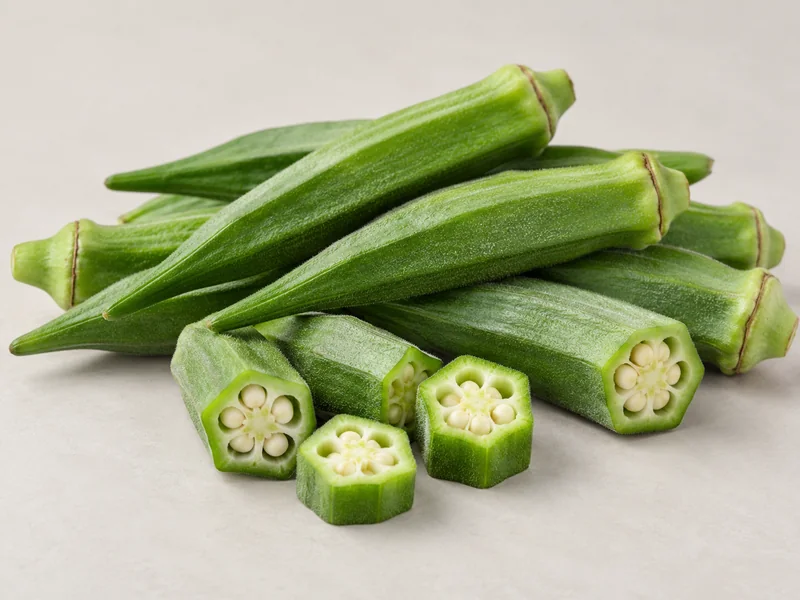
The records below describe okra crop production; not frozen processing output. Quantities are national production statistics for the stated year, not available export quantities or Duara supply capacity. Estimates are labelled; uncorroborated imputed observations are retained internally rather than published as verified production.
These are dated production or manufacturing records, not a list of Duara suppliers or confirmed delivery destinations. The directory covers the evidence verified so far; it does not claim an exhaustive list of all producing countries.
Okra in Albania
2024 okra production: 8,123.95 tonnes. FAOSTAT estimate.
Data year: 2024. Evidence checked: 2026-11-01. Food and Agriculture Organization of the United Nations — 2024 production quantities; item, area and flag codes retained
Okra in Antigua and Barbuda
2024 okra production: 31.65 tonnes. Official national figure in FAOSTAT.
Data year: 2024. Evidence checked: 2026-11-01. Food and Agriculture Organization of the United Nations — 2024 production quantities; item, area and flag codes retained
Okra in Bahamas
2024 okra production: 506.06 tonnes. FAOSTAT estimate.
Data year: 2024. Evidence checked: 2026-11-01. Food and Agriculture Organization of the United Nations — 2024 production quantities; item, area and flag codes retained
Okra in Bahrain
2024 okra production: 690 tonnes. Official national figure in FAOSTAT.
Data year: 2024. Evidence checked: 2026-11-01. Food and Agriculture Organization of the United Nations — 2024 production quantities; item, area and flag codes retained
Okra in Bangladesh
2024 okra production: 99,079 tonnes. Official national figure in FAOSTAT.
Data year: 2024. Evidence checked: 2026-11-01. Food and Agriculture Organization of the United Nations — 2024 production quantities; item, area and flag codes retained
Okra in Belize
2024 okra production: 14 tonnes. Official national figure in FAOSTAT.
Data year: 2024. Evidence checked: 2026-11-01. Food and Agriculture Organization of the United Nations — 2024 production quantities; item, area and flag codes retained
Okra in Bhutan
2024 okra production: 25.99 tonnes. FAOSTAT estimate.
Data year: 2024. Evidence checked: 2026-11-01. Food and Agriculture Organization of the United Nations — 2024 production quantities; item, area and flag codes retained
Okra in Brunei Darussalam
2024 okra production: 445.89 tonnes. FAOSTAT estimate.
Data year: 2024. Evidence checked: 2026-11-01. Food and Agriculture Organization of the United Nations — 2024 production quantities; item, area and flag codes retained
Okra in Cameroon
2024 okra production: 75,308.81 tonnes. FAOSTAT estimate.
Data year: 2024. Evidence checked: 2026-11-01. Food and Agriculture Organization of the United Nations — 2024 production quantities; item, area and flag codes retained
Okra in Congo
2024 okra production: 1,565.73 tonnes. FAOSTAT estimate.
Data year: 2024. Evidence checked: 2026-11-01. Food and Agriculture Organization of the United Nations — 2024 production quantities; item, area and flag codes retained
Okra in Côte d’Ivoire
2024 okra production: 181,276 tonnes. Official national figure in FAOSTAT. Dataset area: Côte d'Ivoire.
Data year: 2024. Evidence checked: 2026-11-01. Food and Agriculture Organization of the United Nations — 2024 production quantities; item, area and flag codes retained
Okra in Dominican Republic
2024 okra production: 836,360.54 tonnes. Official national figure in FAOSTAT.
Data year: 2024. Evidence checked: 2026-11-01. Food and Agriculture Organization of the United Nations — 2024 production quantities; item, area and flag codes retained
Okra in Fiji
2024 okra production: 6,125 tonnes. Official national figure in FAOSTAT.
Data year: 2024. Evidence checked: 2026-11-01. Food and Agriculture Organization of the United Nations — 2024 production quantities; item, area and flag codes retained
Okra in India
2024 okra production: 7,305,410 tonnes. Official national figure in FAOSTAT.
Data year: 2024. Evidence checked: 2026-11-01. Food and Agriculture Organization of the United Nations — 2024 production quantities; item, area and flag codes retained
Okra in Iraq
2024 okra production: 46,969 tonnes. Official national figure in FAOSTAT.
Data year: 2024. Evidence checked: 2026-11-01. Food and Agriculture Organization of the United Nations — 2024 production quantities; item, area and flag codes retained
Okra in Jamaica
2024 okra production: 6,034 tonnes. Official national figure in FAOSTAT.
Data year: 2024. Evidence checked: 2026-11-01. Food and Agriculture Organization of the United Nations — 2024 production quantities; item, area and flag codes retained
Okra in Jordan
2024 okra production: 6,651.15 tonnes. Official national figure in FAOSTAT.
Data year: 2024. Evidence checked: 2026-11-01. Food and Agriculture Organization of the United Nations — 2024 production quantities; item, area and flag codes retained
Okra in Kenya
2024 okra production: 22,106 tonnes. Official national figure in FAOSTAT.
Data year: 2024. Evidence checked: 2026-11-01. Food and Agriculture Organization of the United Nations — 2024 production quantities; item, area and flag codes retained
Okra in Kuwait
2024 okra production: 1,655.98 tonnes. Official national figure in FAOSTAT.
Data year: 2024. Evidence checked: 2026-11-01. Food and Agriculture Organization of the United Nations — 2024 production quantities; item, area and flag codes retained
Okra in Lebanon
2024 okra production: 1,057.21 tonnes. FAOSTAT estimate.
Data year: 2024. Evidence checked: 2026-11-01. Food and Agriculture Organization of the United Nations — 2024 production quantities; item, area and flag codes retained
Okra in Malawi
2024 okra production: 2,874.55 tonnes. FAOSTAT estimate.
Data year: 2024. Evidence checked: 2026-11-01. Food and Agriculture Organization of the United Nations — 2024 production quantities; item, area and flag codes retained
Okra in Malaysia
2024 okra production: 70,202.62 tonnes. Official national figure in FAOSTAT.
Data year: 2024. Evidence checked: 2026-11-01. Food and Agriculture Organization of the United Nations — 2024 production quantities; item, area and flag codes retained
Okra in Mali
2024 okra production: 655,971.17 tonnes. Official national figure in FAOSTAT.
Data year: 2024. Evidence checked: 2026-11-01. Food and Agriculture Organization of the United Nations — 2024 production quantities; item, area and flag codes retained
Okra in Mauritius
2024 okra production: 1,362.3 tonnes. Official national figure in FAOSTAT.
Data year: 2024. Evidence checked: 2026-11-01. Food and Agriculture Organization of the United Nations — 2024 production quantities; item, area and flag codes retained
Okra in Mexico
2024 okra production: 35,320.11 tonnes. Official national figure in FAOSTAT.
Data year: 2024. Evidence checked: 2026-11-01. Food and Agriculture Organization of the United Nations — 2024 production quantities; item, area and flag codes retained
Okra in Niger
2024 okra production: 200,458.33 tonnes. Official national figure in FAOSTAT.
Data year: 2024. Evidence checked: 2026-11-01. Food and Agriculture Organization of the United Nations — 2024 production quantities; item, area and flag codes retained
Okra in Oman
2024 okra production: 8,301 tonnes. Official national figure in FAOSTAT.
Data year: 2024. Evidence checked: 2026-11-01. Food and Agriculture Organization of the United Nations — 2024 production quantities; item, area and flag codes retained
Okra in Pakistan
2024 okra production: 306,294 tonnes. Official national figure in FAOSTAT.
Data year: 2024. Evidence checked: 2026-11-01. Food and Agriculture Organization of the United Nations — 2024 production quantities; item, area and flag codes retained
Okra in Philippines
2024 okra production: 32,504.42 tonnes. Official national figure in FAOSTAT.
Data year: 2024. Evidence checked: 2026-11-01. Food and Agriculture Organization of the United Nations — 2024 production quantities; item, area and flag codes retained
Okra in Senegal
2024 okra production: 22,969 tonnes. Official national figure in FAOSTAT.
Data year: 2024. Evidence checked: 2026-11-01. Food and Agriculture Organization of the United Nations — 2024 production quantities; item, area and flag codes retained
Okra in Sierra Leone
2024 okra production: 84,287.4 tonnes. Official national figure in FAOSTAT.
Data year: 2024. Evidence checked: 2026-11-01. Food and Agriculture Organization of the United Nations — 2024 production quantities; item, area and flag codes retained
Okra in Sri Lanka
2024 okra production: 72,623 tonnes. Official national figure in FAOSTAT.
Data year: 2024. Evidence checked: 2026-11-01. Food and Agriculture Organization of the United Nations — 2024 production quantities; item, area and flag codes retained
Okra in Sudan
2024 okra production: 303,831.06 tonnes. FAOSTAT estimate.
Data year: 2024. Evidence checked: 2026-11-01. Food and Agriculture Organization of the United Nations — 2024 production quantities; item, area and flag codes retained
Okra in Syrian Arab Republic
2024 okra production: 15,161 tonnes. Official national figure in FAOSTAT.
Data year: 2024. Evidence checked: 2026-11-01. Food and Agriculture Organization of the United Nations — 2024 production quantities; item, area and flag codes retained
Okra in Trinidad and Tobago
2024 okra production: 1,385 tonnes. Official national figure in FAOSTAT.
Data year: 2024. Evidence checked: 2026-11-01. Food and Agriculture Organization of the United Nations — 2024 production quantities; item, area and flag codes retained
Okra in Türkiye
2024 okra production: 28,152 tonnes. Official national figure in FAOSTAT.
Data year: 2024. Evidence checked: 2026-11-01. Food and Agriculture Organization of the United Nations — 2024 production quantities; item, area and flag codes retained