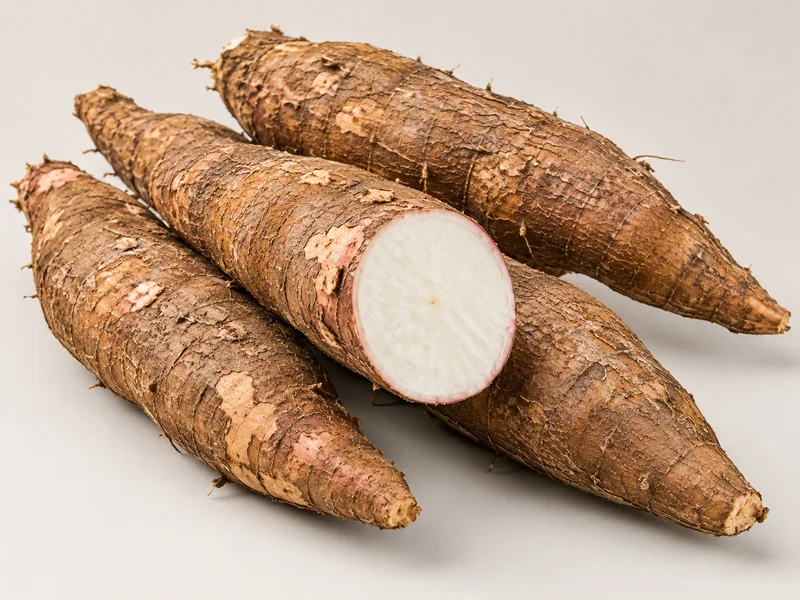
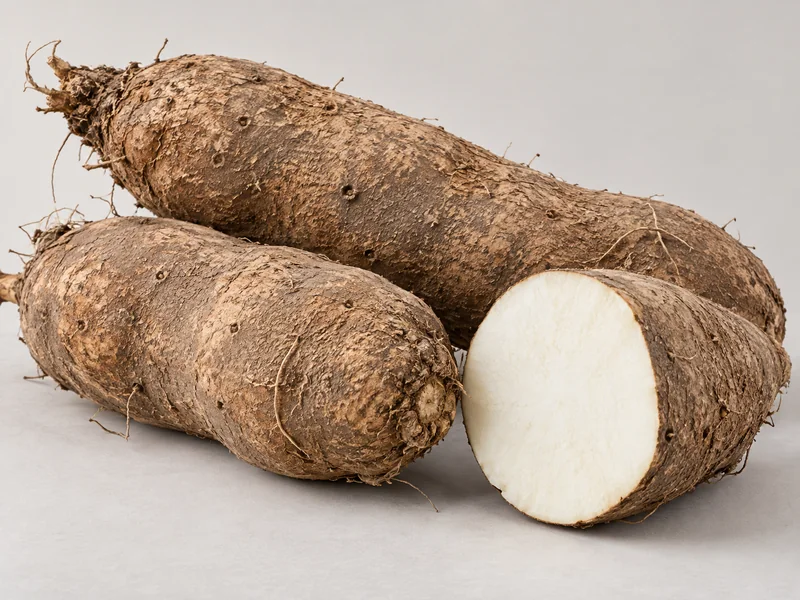
The records below describe fresh cassava root crop production; not dried chips, flour or starch manufacture. Quantities are national production statistics for the stated year, not available export quantities or Duara supply capacity. Estimates are labelled; uncorroborated imputed observations are retained internally rather than published as verified production.
These are dated production or manufacturing records, not a list of Duara suppliers or confirmed delivery destinations. The directory covers the evidence verified so far; it does not claim an exhaustive list of all producing countries.
Cassava in Angola
2024 cassava, fresh production: 11,930,569 tonnes. Official national figure in FAOSTAT.
Data year: 2024. Evidence checked: 2026-11-01. Food and Agriculture Organization of the United Nations — 2024 production quantities; item, area and flag codes retained
Cassava in Antigua and Barbuda
2024 cassava, fresh production: 50.5 tonnes. Official national figure in FAOSTAT.
Data year: 2024. Evidence checked: 2026-11-01. Food and Agriculture Organization of the United Nations — 2024 production quantities; item, area and flag codes retained
Cassava in Argentina
2024 cassava, fresh production: 201,734.89 tonnes. FAOSTAT estimate.
Data year: 2024. Evidence checked: 2026-11-01. Food and Agriculture Organization of the United Nations — 2024 production quantities; item, area and flag codes retained
Cassava in Belize
2024 cassava, fresh production: 440 tonnes. Official national figure in FAOSTAT.
Data year: 2024. Evidence checked: 2026-11-01. Food and Agriculture Organization of the United Nations — 2024 production quantities; item, area and flag codes retained
Cassava in Benin
2024 cassava, fresh production: 4,448,391.32 tonnes. Official national figure in FAOSTAT.
Data year: 2024. Evidence checked: 2026-11-01. Food and Agriculture Organization of the United Nations — 2024 production quantities; item, area and flag codes retained
Cassava in Bhutan
2024 cassava, fresh production: 359.98 tonnes. Official national figure in FAOSTAT.
Data year: 2024. Evidence checked: 2026-11-01. Food and Agriculture Organization of the United Nations — 2024 production quantities; item, area and flag codes retained
Cassava in Bolivia (Plurinational State of)
2024 cassava, fresh production: 213,118.76 tonnes. Official national figure in FAOSTAT.
Data year: 2024. Evidence checked: 2026-11-01. Food and Agriculture Organization of the United Nations — 2024 production quantities; item, area and flag codes retained
Cassava in Brazil
2024 cassava, fresh production: 19,066,096 tonnes. Official national figure in FAOSTAT.
Data year: 2024. Evidence checked: 2026-11-01. Food and Agriculture Organization of the United Nations — 2024 production quantities; item, area and flag codes retained
Cassava in Brunei Darussalam
2024 cassava, fresh production: 425.28 tonnes. Official national figure in FAOSTAT.
Data year: 2024. Evidence checked: 2026-11-01. Food and Agriculture Organization of the United Nations — 2024 production quantities; item, area and flag codes retained
Cassava in Cabo Verde
2024 cassava, fresh production: 2,119 tonnes. Official national figure in FAOSTAT.
Data year: 2024. Evidence checked: 2026-11-01. Food and Agriculture Organization of the United Nations — 2024 production quantities; item, area and flag codes retained
Cassava in Chad
2024 cassava, fresh production: 297,842 tonnes. Official national figure in FAOSTAT.
Data year: 2024. Evidence checked: 2026-11-01. Food and Agriculture Organization of the United Nations — 2024 production quantities; item, area and flag codes retained
Cassava in China
2024 cassava, fresh production: 5,069,031.18 tonnes. FAOSTAT estimate. Dataset area: China, mainland.
Data year: 2024. Evidence checked: 2026-11-01. Food and Agriculture Organization of the United Nations — 2024 production quantities; item, area and flag codes retained
Cassava in Colombia
2024 cassava, fresh production: 1,115,404.76 tonnes. Official national figure in FAOSTAT.
Data year: 2024. Evidence checked: 2026-11-01. Food and Agriculture Organization of the United Nations — 2024 production quantities; item, area and flag codes retained
Cassava in Côte d’Ivoire
2024 cassava, fresh production: 8,485,694 tonnes. Official national figure in FAOSTAT. Dataset area: Côte d'Ivoire.
Data year: 2024. Evidence checked: 2026-11-01. Food and Agriculture Organization of the United Nations — 2024 production quantities; item, area and flag codes retained
Cassava in Democratic Republic of the Congo
2024 cassava, fresh production: 46,558,022 tonnes. Official national figure in FAOSTAT.
Data year: 2024. Evidence checked: 2026-11-01. Food and Agriculture Organization of the United Nations — 2024 production quantities; item, area and flag codes retained
Cassava in Dominica
2024 cassava, fresh production: 78.02 tonnes. FAOSTAT estimate.
Data year: 2024. Evidence checked: 2026-11-01. Food and Agriculture Organization of the United Nations — 2024 production quantities; item, area and flag codes retained
Cassava in Dominican Republic
2024 cassava, fresh production: 273,530.2 tonnes. Official national figure in FAOSTAT.
Data year: 2024. Evidence checked: 2026-11-01. Food and Agriculture Organization of the United Nations — 2024 production quantities; item, area and flag codes retained
Cassava in Ecuador
2024 cassava, fresh production: 84,767.92 tonnes. Official national figure in FAOSTAT.
Data year: 2024. Evidence checked: 2026-11-01. Food and Agriculture Organization of the United Nations — 2024 production quantities; item, area and flag codes retained
Cassava in Equatorial Guinea
2024 cassava, fresh production: 77,190.03 tonnes. FAOSTAT estimate.
Data year: 2024. Evidence checked: 2026-11-01. Food and Agriculture Organization of the United Nations — 2024 production quantities; item, area and flag codes retained
Cassava in Fiji
2024 cassava, fresh production: 120,250 tonnes. Official national figure in FAOSTAT.
Data year: 2024. Evidence checked: 2026-11-01. Food and Agriculture Organization of the United Nations — 2024 production quantities; item, area and flag codes retained
Cassava in French Polynesia
2024 cassava, fresh production: 3,690.31 tonnes. FAOSTAT estimate.
Data year: 2024. Evidence checked: 2026-11-01. Food and Agriculture Organization of the United Nations — 2024 production quantities; item, area and flag codes retained
Cassava in Gambia
2024 cassava, fresh production: 12,212.4 tonnes. FAOSTAT estimate.
Data year: 2024. Evidence checked: 2026-11-01. Food and Agriculture Organization of the United Nations — 2024 production quantities; item, area and flag codes retained
Cassava in Grenada
2024 cassava, fresh production: 0.1 tonnes. Official national figure in FAOSTAT.
Data year: 2024. Evidence checked: 2026-11-01. Food and Agriculture Organization of the United Nations — 2024 production quantities; item, area and flag codes retained
Cassava in Guyana
2024 cassava, fresh production: 99,453 tonnes. Official national figure in FAOSTAT.
Data year: 2024. Evidence checked: 2026-11-01. Food and Agriculture Organization of the United Nations — 2024 production quantities; item, area and flag codes retained
Cassava in Honduras
2024 cassava, fresh production: 25,649.92 tonnes. FAOSTAT estimate.
Data year: 2024. Evidence checked: 2026-11-01. Food and Agriculture Organization of the United Nations — 2024 production quantities; item, area and flag codes retained
Cassava in India
2024 cassava, fresh production: 6,283,343 tonnes. Official national figure in FAOSTAT.
Data year: 2024. Evidence checked: 2026-11-01. Food and Agriculture Organization of the United Nations — 2024 production quantities; item, area and flag codes retained
Cassava in Indonesia
2024 cassava, fresh production: 15,624,038 tonnes. Official national figure in FAOSTAT.
Data year: 2024. Evidence checked: 2026-11-01. Food and Agriculture Organization of the United Nations — 2024 production quantities; item, area and flag codes retained
Cassava in Jamaica
2024 cassava, fresh production: 21,082 tonnes. Official national figure in FAOSTAT.
Data year: 2024. Evidence checked: 2026-11-01. Food and Agriculture Organization of the United Nations — 2024 production quantities; item, area and flag codes retained
Cassava in Kenya
2024 cassava, fresh production: 1,207,537.34 tonnes. Official national figure in FAOSTAT.
Data year: 2024. Evidence checked: 2026-11-01. Food and Agriculture Organization of the United Nations — 2024 production quantities; item, area and flag codes retained
Cassava in Lao People's Democratic Republic
2024 cassava, fresh production: 7,402,000 tonnes. Official national figure in FAOSTAT.
Data year: 2024. Evidence checked: 2026-11-01. Food and Agriculture Organization of the United Nations — 2024 production quantities; item, area and flag codes retained
Cassava in Liberia
2024 cassava, fresh production: 606,958.45 tonnes. FAOSTAT estimate.
Data year: 2024. Evidence checked: 2026-11-01. Food and Agriculture Organization of the United Nations — 2024 production quantities; item, area and flag codes retained
Cassava in Malaysia
2024 cassava, fresh production: 41,341.21 tonnes. Official national figure in FAOSTAT.
Data year: 2024. Evidence checked: 2026-11-01. Food and Agriculture Organization of the United Nations — 2024 production quantities; item, area and flag codes retained
Cassava in Mali
2024 cassava, fresh production: 178,399.89 tonnes. Official national figure in FAOSTAT.
Data year: 2024. Evidence checked: 2026-11-01. Food and Agriculture Organization of the United Nations — 2024 production quantities; item, area and flag codes retained
Cassava in Mauritius
2024 cassava, fresh production: 1,685.3 tonnes. Official national figure in FAOSTAT.
Data year: 2024. Evidence checked: 2026-11-01. Food and Agriculture Organization of the United Nations — 2024 production quantities; item, area and flag codes retained
Cassava in Mexico
2024 cassava, fresh production: 23,488.41 tonnes. Official national figure in FAOSTAT.
Data year: 2024. Evidence checked: 2026-11-01. Food and Agriculture Organization of the United Nations — 2024 production quantities; item, area and flag codes retained
Cassava in Micronesia (Federated States of)
2024 cassava, fresh production: 8,668.01 tonnes. FAOSTAT estimate.
Data year: 2024. Evidence checked: 2026-11-01. Food and Agriculture Organization of the United Nations — 2024 production quantities; item, area and flag codes retained
Cassava in Mozambique
2024 cassava, fresh production: 8,522,790 tonnes. Official national figure in FAOSTAT.
Data year: 2024. Evidence checked: 2026-11-01. Food and Agriculture Organization of the United Nations — 2024 production quantities; item, area and flag codes retained
Cassava in Niger
2024 cassava, fresh production: 1,124,741.78 tonnes. Official national figure in FAOSTAT.
Data year: 2024. Evidence checked: 2026-11-01. Food and Agriculture Organization of the United Nations — 2024 production quantities; item, area and flag codes retained
Cassava in Nigeria
2024 cassava, fresh production: 62,624,946.19 tonnes. FAOSTAT estimate.
Data year: 2024. Evidence checked: 2026-11-01. Food and Agriculture Organization of the United Nations — 2024 production quantities; item, area and flag codes retained
Cassava in Papua New Guinea
2024 cassava, fresh production: 161,028.87 tonnes. FAOSTAT estimate.
Data year: 2024. Evidence checked: 2026-11-01. Food and Agriculture Organization of the United Nations — 2024 production quantities; item, area and flag codes retained
Cassava in Paraguay
2024 cassava, fresh production: 3,050,651 tonnes. Official national figure in FAOSTAT.
Data year: 2024. Evidence checked: 2026-11-01. Food and Agriculture Organization of the United Nations — 2024 production quantities; item, area and flag codes retained
Cassava in Peru
2024 cassava, fresh production: 1,425,272.17 tonnes. Official national figure in FAOSTAT.
Data year: 2024. Evidence checked: 2026-11-01. Food and Agriculture Organization of the United Nations — 2024 production quantities; item, area and flag codes retained
Cassava in Philippines
2024 cassava, fresh production: 2,372,794.2 tonnes. Official national figure in FAOSTAT.
Data year: 2024. Evidence checked: 2026-11-01. Food and Agriculture Organization of the United Nations — 2024 production quantities; item, area and flag codes retained
Cassava in Rwanda
2024 cassava, fresh production: 1,301,324.78 tonnes. Official national figure in FAOSTAT.
Data year: 2024. Evidence checked: 2026-11-01. Food and Agriculture Organization of the United Nations — 2024 production quantities; item, area and flag codes retained
Cassava in Saint Vincent and the Grenadines
2024 cassava, fresh production: 88 tonnes. Official national figure in FAOSTAT.
Data year: 2024. Evidence checked: 2026-11-01. Food and Agriculture Organization of the United Nations — 2024 production quantities; item, area and flag codes retained
Cassava in Samoa
2024 cassava, fresh production: 469.42 tonnes. FAOSTAT estimate.
Data year: 2024. Evidence checked: 2026-11-01. Food and Agriculture Organization of the United Nations — 2024 production quantities; item, area and flag codes retained
Cassava in Sao Tome and Principe
2024 cassava, fresh production: 1,434.11 tonnes. FAOSTAT estimate.
Data year: 2024. Evidence checked: 2026-11-01. Food and Agriculture Organization of the United Nations — 2024 production quantities; item, area and flag codes retained
Cassava in Seychelles
2024 cassava, fresh production: 241.36 tonnes. FAOSTAT estimate.
Data year: 2024. Evidence checked: 2026-11-01. Food and Agriculture Organization of the United Nations — 2024 production quantities; item, area and flag codes retained
Cassava in Sierra Leone
2024 cassava, fresh production: 2,855,435.8 tonnes. Official national figure in FAOSTAT.
Data year: 2024. Evidence checked: 2026-11-01. Food and Agriculture Organization of the United Nations — 2024 production quantities; item, area and flag codes retained
Cassava in Somalia
2024 cassava, fresh production: 98,460.07 tonnes. FAOSTAT estimate.
Data year: 2024. Evidence checked: 2026-11-01. Food and Agriculture Organization of the United Nations — 2024 production quantities; item, area and flag codes retained
Cassava in Sri Lanka
2024 cassava, fresh production: 312,237 tonnes. Official national figure in FAOSTAT.
Data year: 2024. Evidence checked: 2026-11-01. Food and Agriculture Organization of the United Nations — 2024 production quantities; item, area and flag codes retained
Cassava in Thailand
2024 cassava, fresh production: 28,624,312 tonnes. Official national figure in FAOSTAT.
Data year: 2024. Evidence checked: 2026-11-01. Food and Agriculture Organization of the United Nations — 2024 production quantities; item, area and flag codes retained
Cassava in Tonga
2024 cassava, fresh production: 7,093.55 tonnes. FAOSTAT estimate.
Data year: 2024. Evidence checked: 2026-11-01. Food and Agriculture Organization of the United Nations — 2024 production quantities; item, area and flag codes retained
Cassava in Trinidad and Tobago
2024 cassava, fresh production: 1,818.4 tonnes. Official national figure in FAOSTAT.
Data year: 2024. Evidence checked: 2026-11-01. Food and Agriculture Organization of the United Nations — 2024 production quantities; item, area and flag codes retained
Cassava in United Republic of Tanzania
2024 cassava, fresh production: 10,532,000 tonnes. FAOSTAT estimate.
Data year: 2024. Evidence checked: 2026-11-01. Food and Agriculture Organization of the United Nations — 2024 production quantities; item, area and flag codes retained
Cassava in Vanuatu
2024 cassava, fresh production: 10,050 tonnes. FAOSTAT estimate.
Data year: 2024. Evidence checked: 2026-11-01. Food and Agriculture Organization of the United Nations — 2024 production quantities; item, area and flag codes retained
Cassava in Viet Nam
2024 cassava, fresh production: 10,533,957 tonnes. Official national figure in FAOSTAT.
Data year: 2024. Evidence checked: 2026-11-01. Food and Agriculture Organization of the United Nations — 2024 production quantities; item, area and flag codes retained
Cassava in Zambia
2024 cassava, fresh production: 3,127,778.1 tonnes. Official national figure in FAOSTAT.
Data year: 2024. Evidence checked: 2026-11-01. Food and Agriculture Organization of the United Nations — 2024 production quantities; item, area and flag codes retained
Cassava in Zimbabwe
2024 cassava, fresh production: 255,517.27 tonnes. FAOSTAT estimate.
Data year: 2024. Evidence checked: 2026-11-01. Food and Agriculture Organization of the United Nations — 2024 production quantities; item, area and flag codes retained