Raw Materials & CommoditiesIndustrial Raw Materials
Gum Arabic
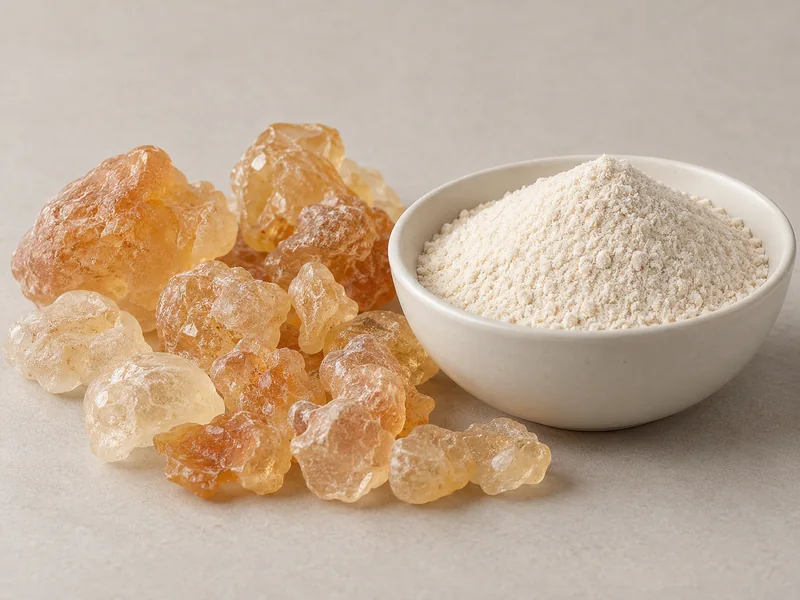
Gum arabic in tears, granules or processed powder, specified by botanical source, grade and functional application.
Gum arabic, also called acacia gum, is traded as collected gum and as cleaned, milled or otherwise processed ingredients. Raw tears, granules and processed powders should not be compared as though they have identical purity, handling or performance. Botanical source and processing matter to applications such as food formulation and other manufacturing. Duara Group reviews the required identity, grade, quality, functional criteria and packing. A processing country is not necessarily a raw-gum harvesting country, and neither activity establishes a confirmed Duara supplier or automatic food-grade availability.
Bulk supply available upon request. Source and supply available upon request.
Pricing Calculator / Build an RFQ
Loading commodity requirements…
Indicative Estimate
Indicative estimate only. Prices are subject to change based on current market conditions, product grade and specifications, crop season, availability, freight, taxes, duties, destination, regulations and final supplier confirmation. This is not a binding quotation.
Prepared in your browser. Your request is shared when you send it in WhatsApp.
Gum Arabic buying guide
Identity, botanical source and process boundaries
Ask for the declared botanical source and the offered gum's identity specification. Acacia senegal and Acacia seyal terminology may appear in trade, but a buyer should obtain the actual declaration and assess suitability rather than assuming every acacia gum performs identically. Raw collection, cleaning, milling and further processing can occur in different countries. A manufacturing-origin record should not be relabelled as evidence that the source trees grew there. Likewise, an export or distributor listing alone cannot establish either harvesting or processing.
Tears, granules and processed powder
Define the physical form and any cleaning, milling, drying or other processing included in the offer. Raw tears may require work that a ready-to-formulate powder does not, while particle size and processing can change handling and hydration behaviour. Agree tolerances for foreign matter and physical defects. A pale colour, fine powder or premium description cannot establish purity or functionality. Confirm the ingredient declaration and ensure that a blend or formulated stabiliser is not presented as the same purchase as the specified gum arabic ingredient.
Grade, purity and analytical evidence
Food and industrial uses need distinct suitability checks. Food manufacturers should agree the applicable identity and purity requirements, analytical methods and limits for their product and destination. Moisture, insoluble material, microbiological quality and other parameters may be relevant, but their acceptance basis belongs in the actual specification. Ask for lot documentation and processing declarations where required. A public reference or a processor's general product page is not a certificate for a proposed Duara lot. No numerical purity, test result or certification is promised here.
Functionality in the buyer's process
Describe the intended formulation and the role expected of the gum, such as a defined emulsification or binding requirement, without assuming that every grade provides the same result. A manufacturer should assess a representative sample using its own formulation and process conditions. Specify hydration, dispersibility, particle-size or other functional criteria where they affect production. Ingredient changes, botanical-source changes and processing changes should follow an agreed approval procedure. General descriptions of gum arabic's uses are not a guarantee of performance in an untested finished product.
Packing, dry storage and contamination controls
Confirm suitable contact packaging, liner and seal, declared net contents, lot codes and pallet arrangement. Powder and granule packs need protection from moisture pickup, odour contamination and physical damage during handling. Review any dust-handling requirements through the buyer's and operator's appropriate procedures rather than treating a bulk ingredient as a retail pack. Ask for the actual product's storage instruction and shelf-life evidence. A raw-gum harvest date, a processing date and a final packing date are different traceability details and should not be used interchangeably.
A complete gum-arabic purchasing brief
Provide botanical-source requirements, physical form, food or industrial application, identity and analytical criteria, functional acceptance, pack, quantity and destination. Include processing restrictions, sample trials, traceability and customer-document requirements. If a particular certification is needed, verify its scope for the actual processor and product. Duara assesses an offered lot and route separately. The country section identifies documented activity and states whether it is processing or production evidence; it does not imply raw-tree origin, available stock, a partnership or guaranteed delivery.
Documented Production by Country
These are documented examples of gum arabic cultivation or processing. Named operators are evidence of activity, not Duara partners. Undated statements are labelled as such; no national quantities, certifications or availability are inferred. Global country coverage remains partial.
These are dated production or manufacturing records, not a list of Duara suppliers or confirmed delivery destinations. The directory covers the evidence verified so far; it does not claim an exhaustive list of all producing countries.
Gum Arabic in France
Nexira explicitly identifies France as the manufacturing location for its processed acacia-gum ingredient. This is processing evidence and does not mean the raw gum was harvested from trees in France.
radio_button_uncheckedProcessing and traceability records
radio_button_uncheckedPack, volume and destination
Applications
checkFood and beverage formulation where suitable
checkConfectionery manufacture
checkIngredient distribution
checkOther manufacturing with defined technical requirements
Frequently asked questions
Does manufacturing gum powder in a country mean the trees grew there?
No. Raw-gum harvesting, processing and packing origins need separate traceability evidence.
Are raw tears and processed powder interchangeable?
Not automatically. Processing needs, purity, particle size and functional performance can differ, so agree the actual form.
Does the name gum arabic establish food-grade status?
No. Food use requires an agreed identity and purity specification and appropriate evidence for the actual product and processor.
How should a formulator approve a grade?
Use the declared identity and processing specification, appropriate tests and a representative sample assessed in the buyer's actual formulation and process.