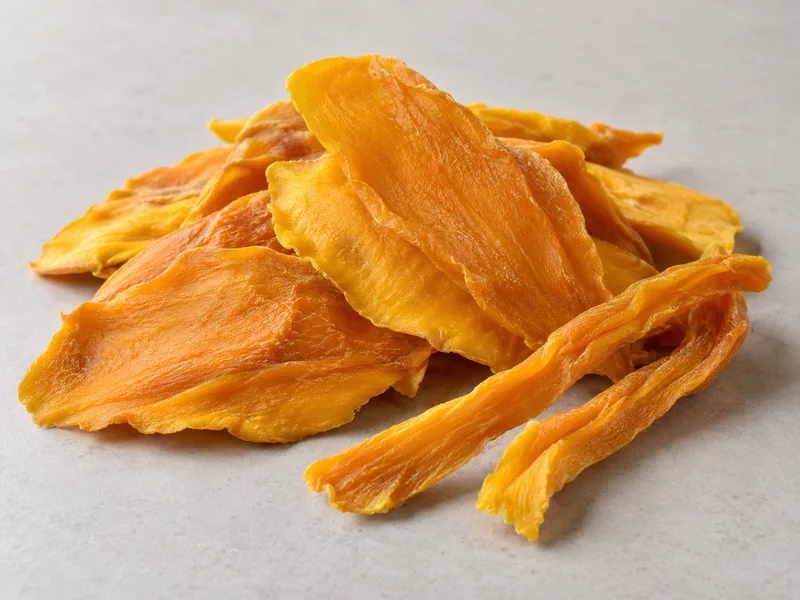
Dried mango slices, strips or pieces by ingredient declaration, drying process, texture, quality and packing.
Dried mangoes are processed fruit products made into slices, strips, pieces or other agreed presentations. Unsweetened, sweetened, sulphited and otherwise treated products need different declarations and should not be treated as the same ingredient. Cultivar and drying process can affect appearance and texture, but those characteristics should be assessed for the offered lot. Duara Group reviews the buyer's application, quality criteria, packing and destination. Fresh-mango cultivation figures do not prove drying operations, finished dried-mango output or confirmed Duara supply from that origin.
Bulk supply available upon request. Source and supply available upon request.
Pricing Calculator / Build an RFQ
Loading commodity requirements…
Indicative Estimate
Indicative estimate only. Prices are subject to change based on current market conditions, product grade and specifications, crop season, availability, freight, taxes, duties, destination, regulations and final supplier confirmation. This is not a binding quotation.
Prepared in your browser. Your request is shared when you send it in WhatsApp.
Dried Mangoes buying guide
Fruit identity and drying process
Identify the mango type or cultivar where it matters and obtain the drying and preparation description for the offered product. Fresh slices, dehydrated fruit, candied pieces and freeze-dried material should not be substituted without an agreed change in specification. A country's fresh-mango crop does not establish a drying factory or a finished-product quantity. Ask for the actual processor and lot traceability. If raw fruit is grown in one country and dried or packed in another, those activities should remain distinct in the product documentation.
Ingredients, sweeteners and treatment declarations
State whether the requirement is unsweetened and identify any restrictions on added sugar, preservatives or other ingredients. Sulphited and unsulphited products need accurate declarations and compliance review for the intended market; colour alone cannot establish treatment status. A no-added-sugar requirement should not be treated as a claim that the fruit contains no naturally occurring sugar. Blends, flavoured snacks and coated fruit need their own full ingredient specifications. Ask for the actual product's label and processing information rather than relying on a general natural or premium description.
Cut, texture and quality acceptance
Slices, strips and diced pieces need an agreed size distribution, broken-piece allowance and tolerance for defects such as discolouration, foreign material and undesirable hard or fibrous portions. Texture should be assessed against the buyer's intended snack or manufacturing application. Moisture and water activity are related to quality and stability decisions but are not interchangeable measurements. Define any required limits, methods and reporting basis with the technical team. A soft or dry feel is not a substitute for appropriate analytical and food-safety evidence for the actual product.
Uses in snacks and food manufacture
Retail snack programmes may prioritise piece appearance, texture and portion presentation. Bakery, cereal and other manufacturers may need a defined cut, handling behaviour and performance in their process. Assess a representative sample under the intended conditions instead of assuming that one dried-mango grade suits every recipe. Agree how changes in cultivar, cut, ingredients or drying process will be approved. General commodity descriptions do not establish suitability for a specific finished food, customer label or nutritional claim; those require the actual formulation and supporting documentation.
Protective packing and storage evidence
Confirm inner-pack barrier requirements, seal integrity, outer-pack strength, net contents, lot coding and pallet configuration. The pack should protect the agreed product from moisture changes, contamination, odour transfer and damage through the proposed route. Ask for the actual shelf-life and storage basis rather than assigning a fixed duration to all dried mangoes. Manufacturing and packing dates should be traceable to the lot. Review receiving checks, sample retention and the response to damaged or nonconforming packs before shipment, including any buyer-specific testing or document requirements.
Information for a dried-mango quotation
Send cultivar or accepted type, cut and size distribution, ingredient and treatment requirements, texture and analytical criteria, intended application, quantity, pack and destination. Include sample approval, label language, traceability and customer documentation. If a certification is requested, verify its actual operator and product scope. Duara assesses the proposed processor, lot and route separately. The country directory documents drying or other relevant processing where supported; it does not convert fresh-fruit output into dried-product tonnage or imply confirmed stock and supply from every origin.
Documented Production by Country
These are documented examples of dried mangoes cultivation or processing. Named operators are evidence of activity, not Duara partners. Undated statements are labelled as such; no national quantities, certifications or availability are inferred. Global country coverage remains partial.
These are dated production or manufacturing records, not a list of Duara suppliers or confirmed delivery destinations. The directory covers the evidence verified so far; it does not claim an exhaustive list of all producing countries.
Dried Mangoes in Burkina Faso
The same review documents Burkina Faso’s drying sector and named local processors, including Timini. This supports actual dried-mango processing rather than export activity alone.
CBI’s March 2026 review identifies HPW Fresh & Dry’s Ghana plant as a dried-mango processor. Finished-product output is not inferred from fresh-mango crop totals.
CBI describes Profood’s dried-mango processing and facilities in Cebu and Davao. Sweetened and other product forms still require their own ingredient specification.
CBI identifies South African dried-mango processing, including Westfalia Fruit. Fresh-fruit input figures are not presented here as finished dried-product tonnes.
radio_button_uncheckedDrying and treatment process
radio_button_uncheckedMoisture, water activity and texture criteria
radio_button_uncheckedDefect and analytical requirements
radio_button_uncheckedProtective pack and net contents
radio_button_uncheckedQuantity and destination
Applications
checkSnack and retail packs
checkBakery and cereal manufacture
checkConfectionery and food service
checkIngredient wholesalers
Frequently asked questions
Do mango-growing statistics prove dried-mango production?
No. Actual drying or processing activity needs separate evidence; fresh-fruit volumes cannot be converted into finished dried-mango output without a supported basis.
Are moisture and water activity the same measure?
No. Agree which measurements, methods and limits are required for the actual product and application.
Does unsweetened mean sugar free?
No. A no-added-sugar requirement is different from the fruit's naturally occurring sugar content. Use the actual ingredient and label evidence.
Can colour establish sulphite treatment?
No. Obtain the actual treatment and ingredient declaration and assess compliance for the intended market.