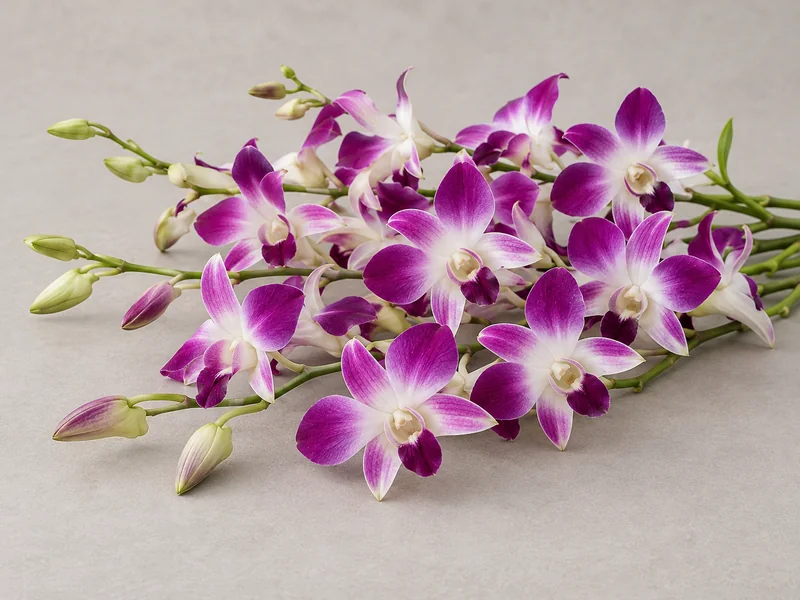
Orchids by genus, cultivar and cut-flower or plant form, with bloom stage, grading, packing and handling agreed.
Orchids cover many genera and commercial presentations, from cut sprays to single-flower stems and living plants. A Dendrobium cut-spray inquiry is different from a Phalaenopsis plant programme, and the name orchids alone cannot establish the product, grade or handling regime. Duara Group reviews genus or cultivar, colour, stem or plant presentation, stage, packing and destination. The country directory documents growing activity where supported; it does not imply every orchid type, a confirmed Duara grower relationship, available stock or a guaranteed flowering or vase-life result.
Bulk supply available upon request. Source and supply available upon request.
Pricing Calculator / Build an RFQ
Loading commodity requirements…
Indicative Estimate
Indicative estimate only. Prices are subject to change based on current market conditions, product grade and specifications, crop season, availability, freight, taxes, duties, destination, regulations and final supplier confirmation. This is not a binding quotation.
Prepared in your browser. Your request is shared when you send it in WhatsApp.
Orchids buying guide
Genus and commercial form define the purchase
State the genus, cultivar or accepted commercial type and whether the requirement is cut flowers or living plants. Dendrobium sprays, Cymbidium stems and Phalaenopsis plants should not be treated as interchangeable offers. A cut-flower production statement also does not prove a nursery's ability to supply rooted plants. Confirm the colour and whether natural variation or any declared colour treatment is permitted. The offered product and sample should match the quotation; a generic orchid photograph is only an illustration and cannot establish cultivar, grade or available supply.
Stem, bloom and opening-stage specifications
Cut-flower buyers should define stem length or range, bloom presentation, acceptable bud and open-flower balance and the defects that matter to their programme. A longer stem does not automatically have the same usable flowering section or presentation as another cultivar. Assess bloom damage, discolouration and stem condition in a representative pack. Living plants need a different specification covering plant and flowering presentation, container and other relevant details. Agree sample or photographic approval for the actual type rather than relying on an undefined premium grade label.
Wholesaler, event and retail requirements
A floral wholesaler may need a consistent bunch and box programme, while an event buyer should define colour, presentation and required receiving stage against its own preparation schedule. Retail plant programmes need explicit plant and pack specifications. Do not promise that an orchid arriving in bud will open to a particular appearance on a fixed event date without product-specific evidence. If substitutions in cultivar, colour, stem length or form are possible, define who can approve them before supply. A growing-country listing cannot establish those commercial commitments.
Protection during packing and handling
Confirm sleeves, bloom protection, bunching, box dimensions, stem orientation and declared stem or plant counts. Packaging should protect the actual orchid type from crushing, abrasion and inappropriate moisture exposure through the proposed route. Living plants may require different support and transport arrangements from cut stems. Review how packs will be loaded, transferred and unpacked at receipt. Any postharvest treatment must be declared and reviewed for the actual product and destination; this guide does not prescribe chemical treatments or imply that a particular process is already used by a Duara source.
A type-specific route and freshness assessment
Orchid handling needs vary by genus and product form, so obtain the grower or packer's instructions rather than applying one generic flower-temperature regime. Review harvest or packing timing, transport, transfer points and receiving facilities together. Ask for the proposed product's freshness and vase-life evidence under stated conditions, without treating an example as a guaranteed result for every shipment. Plant-health and import documentation depend on the product and destination and must be assessed for the actual route. Documented cultivation alone does not establish destination eligibility.
Preparing an orchid quotation request
Send genus or cultivar, cut or living form, colour, stem or plant grade, bloom stage, pack, quantity, destination and receiving schedule. Include substitution rules, sample approval, plant-health documentation and customer requirements. Explain whether the flowers are for wholesale distribution, a retail programme or a particular event so the requested presentation can be assessed. Duara reviews an actual grower, product and workable route separately. The country section describes evidence of production, not a promise of inventory, a supplier partnership, fixed lead times or guaranteed vase life.
Documented Production by Country
These are documented examples of orchids cultivation or processing. Named operators are evidence of activity, not Duara partners. Undated statements are labelled as such; no national quantities, certifications or availability are inferred. Global country coverage remains partial.
These are dated production or manufacturing records, not a list of Duara suppliers or confirmed delivery destinations. The directory covers the evidence verified so far; it does not claim an exhaustive list of all producing countries.
Orchids in Netherlands (Kingdom of the)
Walter Grootscholten describes its cut-Phalaenopsis nursery in De Lier. The evidence concerns orchid cultivation, without implying that all orchid genera or potted forms are offered.
Thai Orchids documents orchid cultivation at Damnoen Saduak in Ratchaburi, including Dendrobium and other named types. This is farm evidence, not a national stem total or a guarantee of every commercial form.