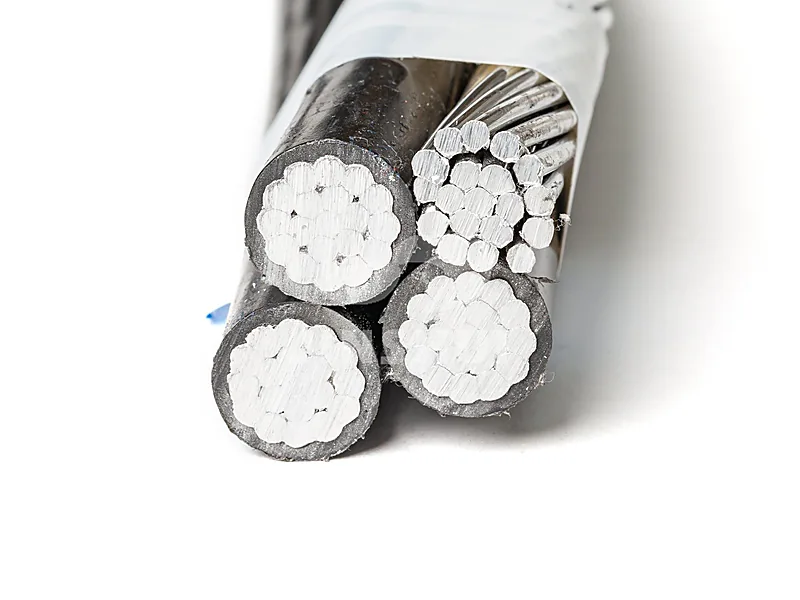
AAC: All Aluminium Conductor
AAC uses aluminium strands and offers low weight with useful electrical conductivity. Its mechanical properties must be assessed against span and loading requirements.
Overhead electrical conductors carry electricity along supported aerial lines, with electrical capacity and mechanical strength assessed together.
Duara Group handles overhead conductor enquiries for electricity distribution, transmission infrastructure and rural electrification projects. Common industry families include all-aluminium conductors, all-aluminium-alloy conductors and Aluminium Conductor Steel Reinforced conductors. They differ in material composition, strength, weight and sag behaviour, so conductor selection must follow the line design. The families described here are specification options for enquiry; no particular size, stranding or utility approval is confirmed as supplied.
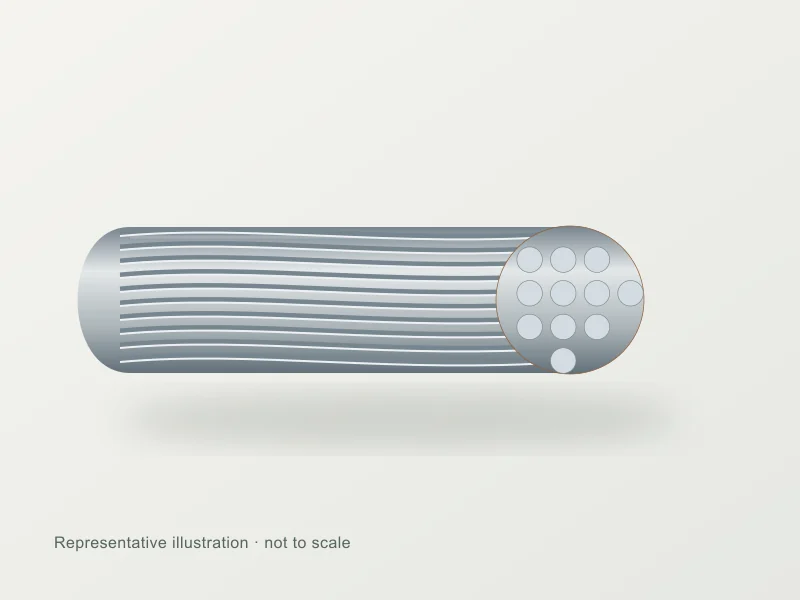
These are general cable construction options for specification discussions. The configuration, materials and performance of the proposed supply must be confirmed in the quotation; this list does not establish available sizes or stock.
AAC uses aluminium strands and offers low weight with useful electrical conductivity. Its mechanical properties must be assessed against span and loading requirements.
AAAC uses aluminium alloy strands. Compared with conventional AAC, the alloy generally provides greater strength, with conductivity and corrosion performance dependent on the specified alloy and design.
ACSR combines aluminium strands with a steel reinforcing core. The steel contributes mechanical strength while the aluminium carries most of the current; stranding and material proportions affect the complete conductor.
No product-specific sizes, ratings or packaging have been documented for this cable. Request a supplier datasheet against the fields below before approving a quotation.
| Parameter | What to define |
|---|---|
| Material and family | Specify AAC, AAAC, ACSR or another engineer-approved design; material grade and exact construction are confirmed on enquiry. |
| Electrical design fields | Required conductor area, resistance, design current, operating conditions and loss assessment; no capacity table is published. |
| Mechanical design fields | Stranding, diameter, mass per length, rated strength, span, sag and tension data must match the approved line design. |
| Accessories and documentation | Specify compatible clamps, joints, insulators, drum lengths and the utility acceptance or testing requirements for the exact conductor. |
Duara Group coordinates cable sourcing, procurement and distribution for Kenya, East Africa and international buyers. We do not manufacture cables. Producer, origin, quantities and delivery arrangements are confirmed for each enquiry.
No product certification, voltage rating, current rating, fire rating or temperature limit is claimed here. A qualified project designer must assess the proposed cable and applicable installation requirements.
A lighter conductor can reduce loads on structures, while reinforcement can support a different span or tension design. Compare losses, sag, clearances and mechanical load cases together; a material name does not identify a replacement conductor.
Provide span schedule, supports, route conditions, wind and other relevant loads, corrosion exposure and clearance requirements. Overhead conductors and their hardware must be evaluated as a line system by the project engineer.
Send the approved conductor designation or construction, total length, required drum schedule, accessory interfaces and inspection plan. Identify the utility specification and destination so supplier documentation can be assessed before commercial approval.
Specifications vary by manufacturer and configuration. Confirm the points below when you enquire and we will quote against them.
AAC uses aluminium strands; AAAC uses aluminium alloy strands; ACSR uses aluminium strands around a steel reinforcing core. Their conductivity, weight, strength and sag characteristics must be compared for the intended line.
No. The suitable design depends on electrical duty, spans, structural loads, clearances and environment. A stronger design may have different weight, loss and corrosion considerations.
The families discussed here are commonly used as bare conductors. Do not treat them as insulated building cables; any covered or insulated line construction must be specified separately.
No size or stranding schedule has been verified for supply. Submit the engineer-approved designation, material and construction for a supplier-confirmed quotation.
Include the line specification, conductor family and construction, length and drum schedule, mechanical and electrical acceptance data, accessory requirements, tests and delivery destination.
Duara Group supplies overhead conductors to commercial, industrial and institutional buyers across East Africa, including Kenya, Uganda, Tanzania, Rwanda and Ethiopia, alongside internationally sourced procurement.
Generation, solar and distribution equipment is supplied to commercial, industrial and institutional sites across the region.
Availability, origin and documentation are confirmed per inquiry.
Glands, terminations, trays, ladders and reticulation components.
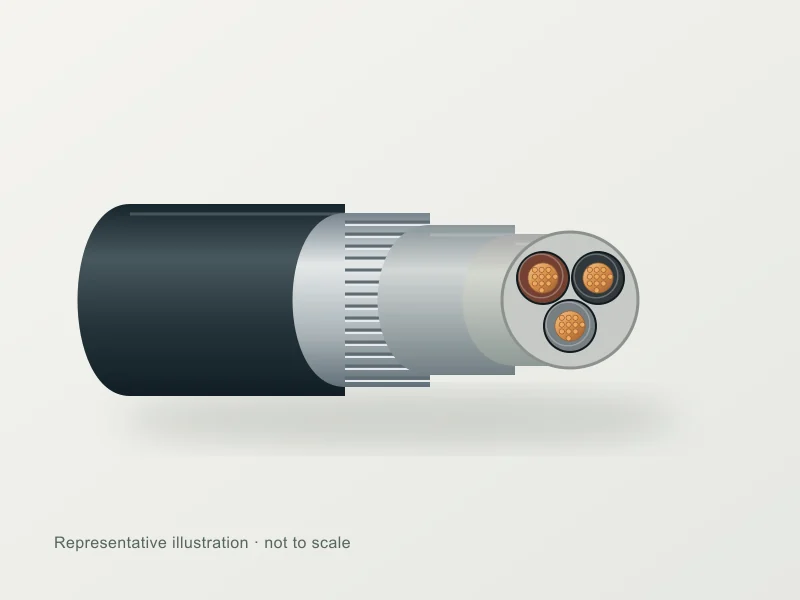
Armoured electrical power cables include a protective metallic layer for installation routes exposed to mechanical stresses.
Tell us the specification, quantity and destination and our sourcing team will come back with availability and a quotation.