Food & Beverages
Canola Oil Supply, Sourcing and Bulk Procurement
A practical guide for manufacturers, distributors and procurement teams buying canola oil in commercial quantities.
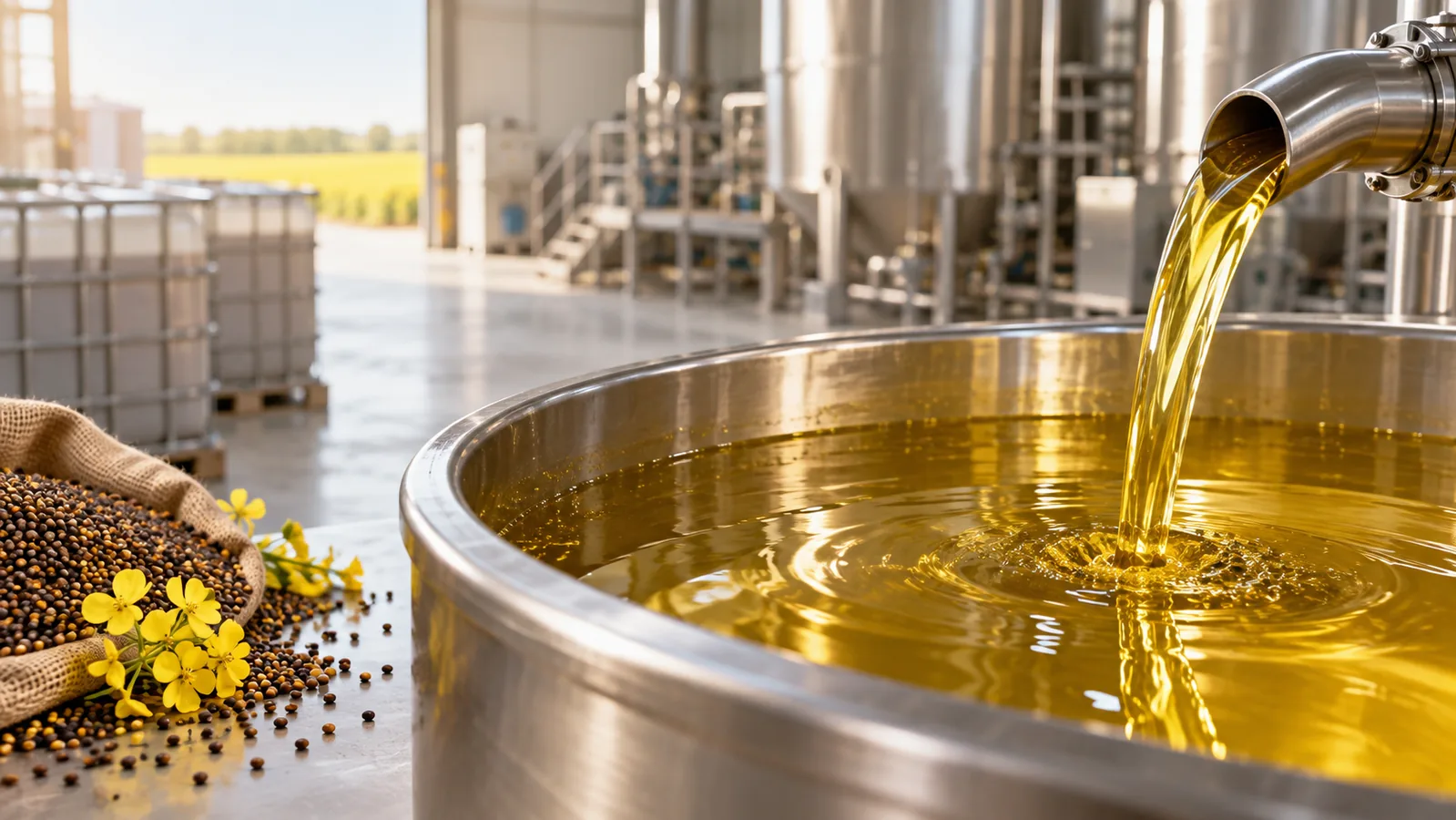
Table of Contents
Canola oil is an edible vegetable oil produced from low-erucic-acid varieties of rapeseed. Food manufacturers, wholesalers, distributors and institutional buyers typically procure it by defining the required grade, quality specification, pack format, quantity, destination and delivery term before suppliers are asked to quote.
For commercial sourcing, the product name alone is not enough. The buyer should distinguish refined oil from crude or mechanically pressed oil, state the intended use, and approve the actual supplier's specification and documents before contracting.
What Is Canola Oil?
Canola oil is the trade name commonly used for low-erucic-acid rapeseed oil. The Codex Standard for Named Vegetable Oils identifies canola oil as a synonym for low-erucic-acid rapeseed oil derived from specified Brassica species.
Commercial offers can differ by processing method and grade. Refined canola oil is prepared for food use through refining steps that improve stability, colour, flavour and odour. Crude, expeller-pressed and cold-pressed oils are different purchasing categories and should not be treated as interchangeable without confirming the intended process and applicable standard.
What Is Canola Oil Used For?
Canola oil is bought for food manufacturing, foodservice, wholesale distribution, repacking and other approved industrial applications. The appropriate grade depends on whether the buyer will use the oil directly, formulate it into another food, or refine it further.
- Commercial cooking, frying and foodservice operations
- Processed foods, sauces, dressings, bakery products and prepared meals
- Margarine, shortening and fat-blend manufacture where the formulation permits
- Wholesale and private-label packing
- Further refining or industrial processing under a buyer-approved specification
Suitability must be evaluated against the finished product, process conditions and destination-market rules. A supplier's general product description does not replace the buyer's technical approval.
Who Buys Canola Oil in Bulk?
Bulk buyers include food processors, snack and bakery manufacturers, caterers, restaurant-supply distributors, edible-oil packers, wholesalers, importers and institutional procurement departments. Trading and distribution companies may also consolidate demand for regional delivery.
The purchasing process differs by buyer. A manufacturer may prioritize repeatable technical performance and audit documents, while a distributor may focus on pack formats, labels, shelf life and delivery cadence. International buyers also need a clear allocation of freight, insurance, customs and inspection responsibilities.
Canola Oil for Food Processing and Manufacturing
Manufacturers should select canola oil against a written finished-product requirement. The oil's refining status, sensory profile, stability, allergen or identity-preservation requirements, and compatibility with the production line can all affect approval.
Before a recurring programme begins, the technical team may request a specification sheet, representative sample, certificate of analysis and information about the supplier's quality system. Any change in origin, refinery, formulation or processing method should be handled according to the buyer's change-control process.
How Bulk Canola Oil Is Supplied
Commercial canola oil can move in packaged or bulk formats selected for the order size, route and receiving equipment. Possible formats include sealed food-grade containers, drums, intermediate bulk containers or tanker systems, but actual availability must be confirmed for each supplier and market.
The quotation should identify the net quantity, packaging material, sealing method, palletisation if applicable, load configuration and whether containers are single-use or managed under a return system. For true bulk delivery, the buyer should confirm hose connections, unloading rate, tank capacity, cleaning records and contamination controls before dispatch.
What Buyers Should Specify When Requesting Canola Oil
A complete inquiry allows suppliers to quote the same requirement and reduces avoidable revisions. At minimum, identify the oil type, intended use, quantity, delivery location and required commercial term.
| RFQ field | What the buyer should state | Why it matters |
|---|---|---|
| Product and grade | Refined, crude, expeller-pressed, cold-pressed or another clearly defined type | Different grades are not commercially interchangeable |
| Application | Food manufacturing, foodservice, repacking or further processing | Guides technical and regulatory review |
| Specification | Required quality parameters, test methods and acceptance tolerances | Creates an objective approval basis |
| Quantity and schedule | Trial, one-off or recurring volume and delivery windows | Affects source planning and freight |
| Packaging | Container type, unit size, labels, palletisation and sealing needs | Must fit handling and storage systems |
| Destination | Country, port or final delivery location | Determines route, documents and landed-cost basis |
| Trade term | Requested Incoterm and named place | Allocates cost, risk and transport responsibilities |
| Documents | Certificates, declarations and inspection requirements | Requirements vary by buyer and jurisdiction |
Canola Oil Quality and Specifications
Quality requirements should be attached to the contract or purchase order and tied to agreed methods of analysis. Depending on the grade and use, buyers may review identity and fatty-acid profile, free fatty acids or acid value, peroxide value, moisture and volatile matter, colour, odour, contaminants, additives and other food-safety criteria.
These parameters are not a universal Duara Group specification. Limits vary by product grade, national regulation, customer process and supplier. Codex CXS 210 provides internationally recognized descriptions and composition criteria for named edible oils, while destination authorities and buyer standards may add further requirements.
Packaging Options for Bulk Canola Oil
Packaging should protect the oil from contamination, moisture, light and avoidable oxidation throughout the route. The right option depends on volume, handling infrastructure, transit time, storage conditions and whether the buyer can receive tanker or intermediate-bulk deliveries.
Buyers should confirm food-contact suitability, closures and tamper evidence, coding and traceability, label language, pallet requirements, temperature considerations and container cleanliness. Do not assume a particular drum, tote or tanker format is available until the supplying party confirms it in writing.
Canola Oil Sourcing and Procurement
Effective sourcing starts with an approved specification and a realistic demand plan. Duara Group works as a supply, sourcing, procurement and trading company for buyers seeking agricultural commodities and other products in African and international markets; any canola oil inquiry is reviewed against the requested grade, quantity, route and supplier availability.
Buyers can also review Duara Group's canola oil product page and edible-oils supply category. Where crushing co-products are relevant, see the separate guide to bulk canola meal sourcing.
International Canola Oil Supply
Canola oil can be procured across borders when the product, supplier, route and documents meet the importing country's requirements. International supply planning should address product classification, import permits where applicable, inspection, food-safety compliance, marine or inland freight, insurance, port handling and final delivery.
The Incoterm must include a named place or port and agreed edition. A price described only as “FOB” or “CIF” is incomplete without the named location and a clear shipment window. The buyer should also confirm who is responsible for customs clearance, duties, destination testing and demurrage risk.
Documents Buyers May Require
Document requirements vary by origin, destination, grade and buyer policy. A commercial file may include a specification sheet, certificate of analysis, commercial invoice, packing list, transport document and certificate of origin, plus food-safety, health, inspection or conformity documents where the contract or regulator requires them.
Buyers should list mandatory documents in the RFQ rather than after shipment. A certificate or certification should never be assumed from a generic product offer; its scope, issuing body, facility coverage and validity should be verified for the proposed source.
Factors That Affect Canola Oil Pricing
Bulk canola oil pricing is time-sensitive and depends on the agreed product and delivery basis. Seed and vegetable-oil markets, grade, refining and testing requirements, order size, packaging, freight, exchange rates, insurance, duties, taxes and shipment timing can all affect the final quote.
Comparisons should use the same specification, net quantity, currency, Incoterm, named place, packaging and validity period. A lower ex-works or port price may not produce a lower landed cost if freight, losses, financing or destination charges differ.
How to Request a Canola Oil Quotation
Send a concise RFQ with the information below. If a parameter is not yet known, identify it as open for supplier proposal instead of allowing an assumption to become part of the offer.
- Required product type and intended use
- Technical specification and agreed test methods
- Trial quantity, total quantity and delivery schedule
- Preferred packaging, labels and pallet requirements
- Destination country, port and final delivery point
- Requested Incoterm and named place
- Required certificates, declarations, inspection and shipment documents
- Quotation currency, payment requirements and offer-validity expectation
Submit these details through the Duara Group request-a-quote form. Our team can then assess the sourcing requirement without representing unconfirmed stock, origin, capacity or delivery dates as available.
Frequently Asked Questions
Where can I buy canola oil in bulk?
Approach an edible-oil producer, authorized distributor or sourcing company with a written grade, quantity, packaging and destination requirement. Duara Group can review commercial canola oil sourcing inquiries subject to supplier and route confirmation.
Who supplies canola oil for food manufacturers?
Refiners, packers, distributors and commodity suppliers serve food manufacturers. The right source is one that can meet the buyer's approved specification, documentation, traceability, volume and delivery programme.
Can I source canola oil from Africa?
Potential sources and trade routes depend on current production, refining capacity, supplier approval and availability. State whether African origin is mandatory or whether supply into an African destination from approved international origins is acceptable.
What is the difference between refined and crude canola oil?
Crude oil is the oil after extraction and initial separation, while refined oil has undergone additional processing to improve characteristics such as colour, flavour, odour and stability. Confirm the exact refining status rather than relying on appearance.
Can canola oil be supplied internationally?
Yes, provided the product and supplier comply with the destination's import, food-safety, labelling and documentation rules and the route is commercially workable. The RFQ should name the destination and requested Incoterm.
What information is required for a quotation?
Provide the product grade, intended use, specification, quantity, packaging, destination, Incoterm, schedule and required documents. This is usually enough to begin source and freight review.
Sources and Further Reading
Source with Duara Group
Looking to source canola oil in bulk? Send Duara Group your required quantity, grade, specifications, packaging, destination and delivery terms for review.
Follow Duara Group insights on Google
Related articles
Food & Beverages
Soybean Oil Supply, Sourcing and Bulk Procurement
Commercial guidance for manufacturers, distributors and procurement teams sourcing soybean oil or soya oil in bulk.