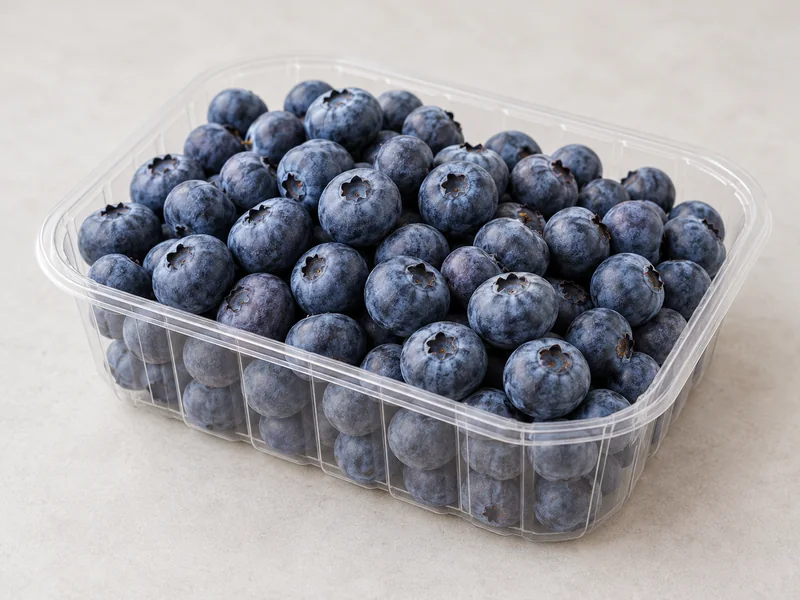
The records below describe blueberry fruit crop production. Quantities are national production statistics for the stated year, not available export quantities or Duara supply capacity. Estimates are labelled; uncorroborated imputed observations are retained internally rather than published as verified production.
These are dated production or manufacturing records, not a list of Duara suppliers or confirmed delivery destinations. The directory covers the evidence verified so far; it does not claim an exhaustive list of all producing countries.
Blueberries in Australia
2024 blueberries production: 27,540 tonnes. Official national figure in FAOSTAT.
Data year: 2024. Evidence checked: 2026-11-01. Food and Agriculture Organization of the United Nations — 2024 production quantities; item, area and flag codes retained
Blueberries in Austria
2024 blueberries production: 1,910 tonnes. Official national figure in FAOSTAT.
Data year: 2024. Evidence checked: 2026-11-01. Food and Agriculture Organization of the United Nations — 2024 production quantities; item, area and flag codes retained
Blueberries in Belgium
2024 blueberries production: 580 tonnes. Official national figure in FAOSTAT.
Data year: 2024. Evidence checked: 2026-11-01. Food and Agriculture Organization of the United Nations — 2024 production quantities; item, area and flag codes retained
Blueberries in Bulgaria
2024 blueberries production: 360 tonnes. Official national figure in FAOSTAT.
Data year: 2024. Evidence checked: 2026-11-01. Food and Agriculture Organization of the United Nations — 2024 production quantities; item, area and flag codes retained
Blueberries in Canada
2024 blueberries production: 165,608 tonnes. Official national figure in FAOSTAT.
Data year: 2024. Evidence checked: 2026-11-01. Food and Agriculture Organization of the United Nations — 2024 production quantities; item, area and flag codes retained
Blueberries in Croatia
2024 blueberries production: 830 tonnes. Official national figure in FAOSTAT.
Data year: 2024. Evidence checked: 2026-11-01. Food and Agriculture Organization of the United Nations — 2024 production quantities; item, area and flag codes retained
Blueberries in Czechia
2024 blueberries production: 740 tonnes. Official national figure in FAOSTAT.
Data year: 2024. Evidence checked: 2026-11-01. Food and Agriculture Organization of the United Nations — 2024 production quantities; item, area and flag codes retained
Blueberries in Denmark
2024 blueberries production: 100 tonnes. Official national figure in FAOSTAT.
Data year: 2024. Evidence checked: 2026-11-01. Food and Agriculture Organization of the United Nations — 2024 production quantities; item, area and flag codes retained
Blueberries in Finland
2024 blueberries production: 210 tonnes. Official national figure in FAOSTAT.
Data year: 2024. Evidence checked: 2026-11-01. Food and Agriculture Organization of the United Nations — 2024 production quantities; item, area and flag codes retained
Blueberries in France
2024 blueberries production: 8,621 tonnes. Official national figure in FAOSTAT.
Data year: 2024. Evidence checked: 2026-11-01. Food and Agriculture Organization of the United Nations — 2024 production quantities; item, area and flag codes retained
Blueberries in Germany
2024 blueberries production: 15,090 tonnes. Official national figure in FAOSTAT.
Data year: 2024. Evidence checked: 2026-11-01. Food and Agriculture Organization of the United Nations — 2024 production quantities; item, area and flag codes retained
Blueberries in Hungary
2024 blueberries production: 80 tonnes. Official national figure in FAOSTAT.
Data year: 2024. Evidence checked: 2026-11-01. Food and Agriculture Organization of the United Nations — 2024 production quantities; item, area and flag codes retained
Blueberries in Italy
2024 blueberries production: 10,360 tonnes. Official national figure in FAOSTAT.
Data year: 2024. Evidence checked: 2026-11-01. Food and Agriculture Organization of the United Nations — 2024 production quantities; item, area and flag codes retained
Blueberries in Latvia
2024 blueberries production: 500 tonnes. Official national figure in FAOSTAT.
Data year: 2024. Evidence checked: 2026-11-01. Food and Agriculture Organization of the United Nations — 2024 production quantities; item, area and flag codes retained
Blueberries in Lithuania
2024 blueberries production: 1,070 tonnes. Official national figure in FAOSTAT.
Data year: 2024. Evidence checked: 2026-11-01. Food and Agriculture Organization of the United Nations — 2024 production quantities; item, area and flag codes retained
Blueberries in Mexico
2024 blueberries production: 80,533.93 tonnes. Official national figure in FAOSTAT.
Data year: 2024. Evidence checked: 2026-11-01. Food and Agriculture Organization of the United Nations — 2024 production quantities; item, area and flag codes retained
Blueberries in Netherlands (Kingdom of the)
2024 blueberries production: 6,910 tonnes. Official national figure in FAOSTAT.
Data year: 2024. Evidence checked: 2026-11-01. Food and Agriculture Organization of the United Nations — 2024 production quantities; item, area and flag codes retained
Blueberries in Norway
2024 blueberries production: 40 tonnes. Official national figure in FAOSTAT.
Data year: 2024. Evidence checked: 2026-11-01. Food and Agriculture Organization of the United Nations — 2024 production quantities; item, area and flag codes retained
Blueberries in Peru
2024 blueberries production: 353,600 tonnes. Official national figure in FAOSTAT.
Data year: 2024. Evidence checked: 2026-11-01. Food and Agriculture Organization of the United Nations — 2024 production quantities; item, area and flag codes retained
Blueberries in Poland
2024 blueberries production: 62,000 tonnes. Official national figure in FAOSTAT.
Data year: 2024. Evidence checked: 2026-11-01. Food and Agriculture Organization of the United Nations — 2024 production quantities; item, area and flag codes retained
Blueberries in Portugal
2024 blueberries production: 22,850 tonnes. Official national figure in FAOSTAT.
Data year: 2024. Evidence checked: 2026-11-01. Food and Agriculture Organization of the United Nations — 2024 production quantities; item, area and flag codes retained
Blueberries in Romania
2024 blueberries production: 5,000 tonnes. Official national figure in FAOSTAT.
Data year: 2024. Evidence checked: 2026-11-01. Food and Agriculture Organization of the United Nations — 2024 production quantities; item, area and flag codes retained
Blueberries in Slovakia
2024 blueberries production: 230 tonnes. Official national figure in FAOSTAT.
Data year: 2024. Evidence checked: 2026-11-01. Food and Agriculture Organization of the United Nations — 2024 production quantities; item, area and flag codes retained
Blueberries in Slovenia
2024 blueberries production: 400 tonnes. Official national figure in FAOSTAT.
Data year: 2024. Evidence checked: 2026-11-01. Food and Agriculture Organization of the United Nations — 2024 production quantities; item, area and flag codes retained
Blueberries in Spain
2024 blueberries production: 60,950 tonnes. Official national figure in FAOSTAT.
Data year: 2024. Evidence checked: 2026-11-01. Food and Agriculture Organization of the United Nations — 2024 production quantities; item, area and flag codes retained
Blueberries in Sweden
2024 blueberries production: 120 tonnes. Official national figure in FAOSTAT.
Data year: 2024. Evidence checked: 2026-11-01. Food and Agriculture Organization of the United Nations — 2024 production quantities; item, area and flag codes retained
Blueberries in Switzerland
2024 blueberries production: 703 tonnes. Official national figure in FAOSTAT.
Data year: 2024. Evidence checked: 2026-11-01. Food and Agriculture Organization of the United Nations — 2024 production quantities; item, area and flag codes retained
Blueberries in Ukraine
2024 blueberries production: 200 tonnes. FAOSTAT estimate.
Data year: 2024. Evidence checked: 2026-11-01. Food and Agriculture Organization of the United Nations — 2024 production quantities; item, area and flag codes retained
Blueberries in United States of America
2024 blueberries production: 401,970 tonnes. Official national figure in FAOSTAT.
Data year: 2024. Evidence checked: 2026-11-01. Food and Agriculture Organization of the United Nations — 2024 production quantities; item, area and flag codes retained